
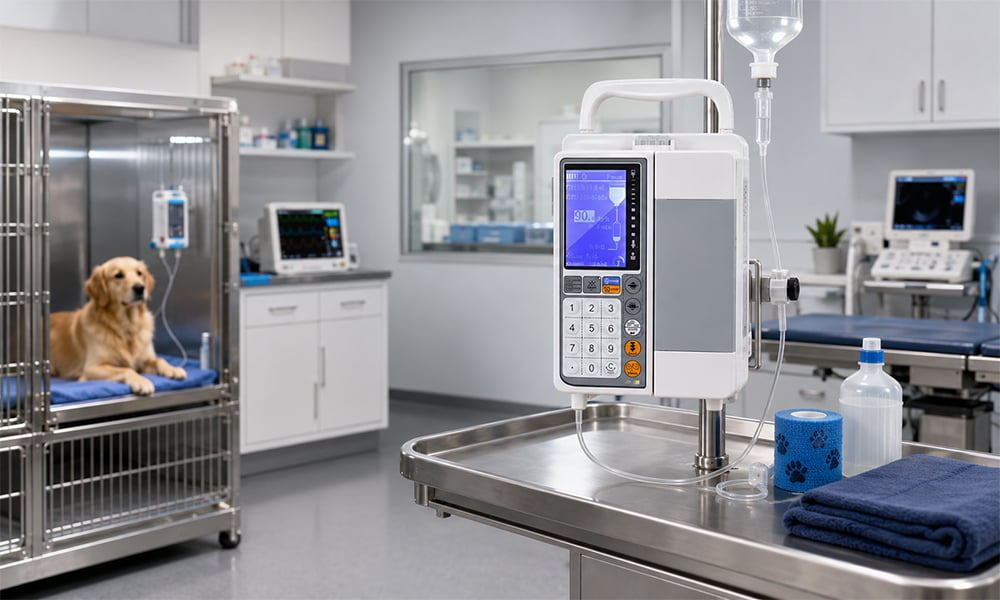
Running a busy veterinary hospital means managing unpredictable cases every day. An emergency dog or cat arrives, an ICU patient requires continuous medication support, and multiple procedures may need fluid therapy at the same time.
But what happens when every veterinary infusion pump in your clinic is already in use?
The problem is not always equipment failure. In many cases, it comes from poor capacity planning — the hospital simply does not have enough infusion pumps available for its actual workflow.
Many veterinary clinics purchase pumps based on intuition, bed numbers, or average daily cases. However, animal hospitals operate differently from general clinics. Emergency cases, ICU monitoring, surgery schedules, and long treatment times can quickly increase simultaneous demand.
This guide explains how veterinary hospitals can estimate the right number of infusion pumps based on real clinical usage, peak demand, and daily workflow requirements.
Why “One Infusion Pump Per Animal” Is Not Enough
A common mistake in veterinary equipment planning is assuming every hospitalized animal requires only one pump or that the number of cages determines pump demand.
In reality, infusion pump usage depends on the type of cases your veterinary hospital handles.
- A routine fluid therapy case may use a pump for only a short period.
- A critical dog or cat in the veterinary ICU may require continuous infusion support for many hours.
- Post-operative patients may need medication delivery while emergency cases arrive simultaneously.
Therefore, the question is not:
“How many animals does my hospital treat every day?”
The more important question is:
“How many veterinary patients may require infusion support at the same time during peak hours?”
Key Factors That Determine Veterinary Infusion Pump Requirements
Several factors influence how many infusion pumps a veterinary clinic or animal hospital should stock.
Peak Concurrent Veterinary Cases
Daily patient volume does not accurately represent equipment demand.
A veterinary hospital may treat 30 animals per day but only need five pumps during normal hours. However, during emergency periods, surgery blocks, or ICU peaks, the demand may increase significantly.
Your pump inventory should be based on the highest number of animals requiring infusion simultaneously.
Veterinary ICU and Critical Care Demand
ICU cases are one of the biggest factors affecting infusion pump requirements.
Animals recovering from major surgery, trauma, poisoning, or severe illness may require continuous:
- Fluid therapy
- Medication infusion
- Nutritional support
- Emergency treatment
Unlike short outpatient treatments, ICU patients may occupy a veterinary infusion pump for an entire shift or longer.
For hospitals operating veterinary ICUs, these pumps should be considered a fixed requirement rather than occasional usage.
Surgery and Emergency Caseload
Surgical procedures often create additional demand for infusion pumps.
During anesthesia and recovery periods, veterinary teams may need infusion support for:
- Intravenous fluids
- Medication administration
- Post-operative care
If surgery schedules overlap with emergency admissions, available pump capacity can become limited quickly.
Hospital Size and Number of Veterinarians
A multi-doctor veterinary hospital usually has more simultaneous treatment activities.
More veterinarians working at the same time often means:
- More hospitalized animals
- More procedures
- More concurrent infusion requirements
Pump inventory should match the actual workflow of the entire veterinary team.
A Practical Way to Calculate Veterinary Infusion Pump Capacity
Instead of using a simple “number of cages × one pump” calculation, veterinary hospitals can use this approach:
1. Identify Peak Concurrent Infusion Cases
Review your busiest working periods and determine:
- How many animals are receiving IV therapy simultaneously?
- How many ICU patients typically require continuous infusion?
- How many surgical cases overlap?
This number represents your baseline demand.
2. Add Veterinary ICU Requirements
If your animal hospital provides ICU or emergency services, add the number of pumps normally occupied by critical-care patients.
These pumps should always be available because ICU demand is usually predictable.
3. Add Backup Capacity
A professional veterinary hospital should maintain additional pumps for:
- Equipment cleaning and disinfection
- Battery charging
- Maintenance
- Unexpected emergency cases
A practical starting point is adding around 15–20% backup capacity above your calculated demand.
Battery Management: A Commonly Overlooked Factor
Many veterinary clinics calculate pump numbers based only on patient demand but forget one important factor: battery charging rotation.
Veterinary infusion pumps are often moved between:
- Emergency rooms
- ICU areas
- Surgery rooms
- Recovery areas
A pump that is charging or undergoing maintenance is temporarily unavailable.
The VET-IP01 Veterinary Infusion Pump features a 3000mAh rechargeable battery with more than 10 hours of backup operation, supporting extended use in veterinary clinical environments.
However, hospitals with continuous infusion requirements should still consider charging rotation when planning total pump inventory.
Signs Your Veterinary Hospital Needs More Infusion Pumps
Your clinic may need additional veterinary infusion pumps if:
- Veterinary staff frequently move pumps between departments.
- Emergency cases are delayed because no pump is immediately available.
- ICU patients occupy most available pumps throughout the day.
- Surgical and hospitalization needs compete for the same equipment.
- Your existing pump fleet has limited backup during maintenance.
Choosing the Right Veterinary Infusion Pump for Your Hospital
Capacity planning is not only about quantity — choosing reliable equipment also affects workflow efficiency.
The VET-IP01 Veterinary Infusion Pump is designed specifically for animal healthcare applications, supporting:
- Multiple Infusion Modes: Volume Mode, Time Mode, and Drug Mode for different veterinary treatment requirements.
- Wide Flow Rate Range: 1.0–1200 ml/h suitable for different animal sizes.
- Enhanced Safety Monitoring: Double CPU system with adjustable occlusion detection and air bubble alarm.
- Reliable Clinical Performance: Designed for veterinary hospitals, animal clinics, and emergency care environments.
Frequently Asked Questions
How many veterinary infusion pumps does a small animal clinic need?
There is no universal number. The requirement depends on peak simultaneous cases, ICU services, surgery volume, and emergency workload.
A small animal clinic with intensive care capability may require more pumps than a larger outpatient-focused practice.
Should veterinary ICU cases be counted differently?
Yes. ICU animals often require continuous infusion support for long periods, so they should be treated as a fixed equipment requirement.
How much backup capacity should a veterinary hospital keep?
Most veterinary hospitals should consider maintaining around 15–20% additional capacity for emergencies, charging rotation, cleaning, and maintenance.
Conclusion
Determining the right number of veterinary infusion pumps is not simply about counting cages or daily animal visits.
A reliable equipment plan should consider:
- Peak concurrent animal cases
- Veterinary ICU workload
- Surgery and emergency demand
- Battery charging rotation
- Backup requirements
By planning according to actual veterinary workflow and selecting dependable equipment such as the VET-IP01 Veterinary Infusion Pump, animal hospitals can improve efficiency, reduce treatment delays, and provide safer care for their patients.