
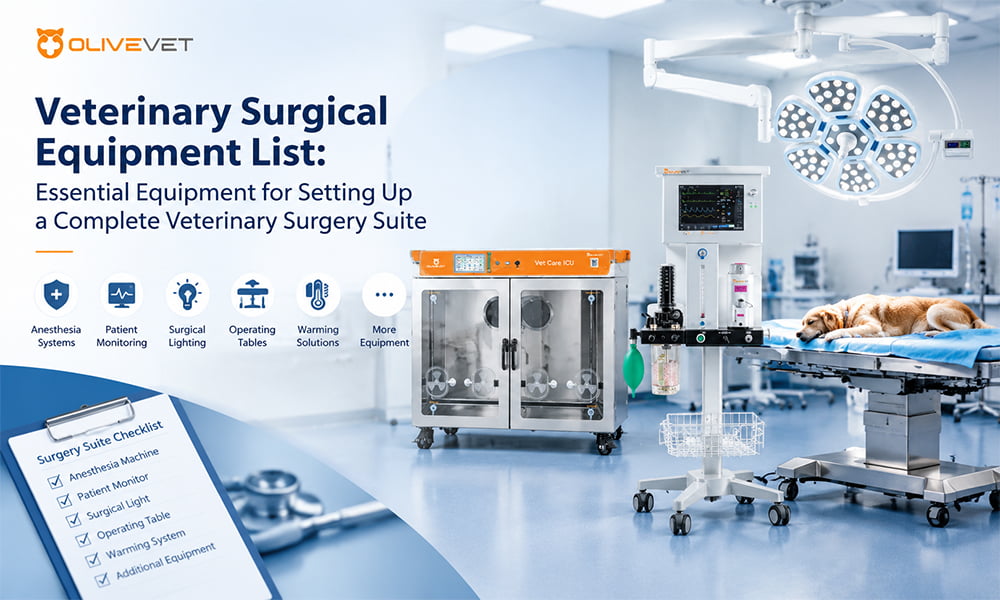
Setting up a professional veterinary surgery suite requires more than selecting individual devices.
A well-designed operating environment needs reliable equipment that supports anesthesia management,
patient monitoring, surgical procedures, and post-operative care.
For the anesthesia station on this list, compare our veterinary anesthesia machines, from compact trolley units to full workstations.
For veterinary clinics, animal hospitals, and veterinary facility planners, choosing the right
veterinary surgical equipment list helps create an efficient workflow, improve surgical safety,
and ensure long-term operational reliability.
This guide covers the essential equipment needed for a complete veterinary surgery suite, including
anesthesia systems, patient monitoring equipment, surgical lighting, operating tables, warming solutions,
and other supporting devices.
What Should Be Considered Before Setting Up a Veterinary Surgery Suite?
Before purchasing veterinary surgical equipment, clinics should evaluate their surgical requirements,
available space, and future development plans.
A properly planned veterinary operating room should consider:
- Types of surgical procedures performed
- Animal sizes and species treated
- Daily surgery volume
- Required monitoring capabilities
- Equipment compatibility and workflow efficiency
A small animal clinic may require a compact but versatile setup, while a larger animal hospital may need
a more comprehensive system with advanced monitoring and ventilation capabilities.
Essential Veterinary Surgical Equipment List for a Complete Surgery Suite
A professional veterinary surgery suite typically includes anesthesia equipment, monitoring systems,
surgical devices, and patient support solutions.
Below are the key equipment categories every veterinary clinic should consider.
1. Veterinary Anesthesia Machine
A veterinary anesthesia machine is one of the most important devices in any surgical environment.
It provides controlled delivery of anesthetic gases and oxygen during procedures.
A reliable anesthesia system helps veterinarians maintain stable anesthesia depth while improving patient safety.
Key features to consider include:
- Accurate anesthetic gas delivery
- Stable oxygen supply
- Compatible breathing circuits
- Easy operation and maintenance
- Safety features for different animal sizes
Modern veterinary anesthesia machines are often integrated with monitoring systems to provide better visibility
of patient status throughout surgery.
2. Veterinary Patient Monitor
A veterinary patient monitor provides real-time information about an animal’s physiological condition
during anesthesia and surgery.
Common monitoring parameters include:
- ECG
- SpO₂
- Non-invasive blood pressure (NIBP)
- Temperature
- Respiratory rate
Continuous monitoring allows veterinary professionals to quickly identify changes during procedures and make
appropriate adjustments.
When selecting a veterinary patient monitor, clinics should consider:
- Number of monitoring parameters
- Display visibility
- Accuracy and reliability
- Compatibility with anesthesia systems
3. Veterinary Ventilator
For longer or more complex procedures, a veterinary ventilator provides controlled mechanical
ventilation support.
During anesthesia, some patients may require assistance maintaining proper ventilation. A ventilator helps
deliver consistent respiratory support based on clinical requirements.
Important factors when selecting a veterinary ventilator include:
- Adjustable ventilation modes
- Tidal volume control
- Suitable application for different animal sizes
- Reliable performance during extended procedures
A compatible anesthesia machine and ventilator combination can improve operating room efficiency.
4. Veterinary Surgical Light
Proper illumination is essential for accurate surgical procedures.
A veterinary surgical light provides focused, shadow-reduced lighting to help veterinarians clearly
observe the surgical area.
Important specifications include:
- High illumination intensity
- Adjustable positioning
- Low heat generation
- Excellent color rendering
- Long service life
LED surgical lights are widely used in modern veterinary operating rooms because they provide stable lighting
performance with reduced energy consumption.
5. Veterinary Operating Table
A veterinary operating table supports proper patient positioning and creates a stable working
environment during surgery.
When selecting an operating table, consider:
- Adjustable height
- Easy cleaning surfaces
- Corrosion resistance
- Flexible positioning options
- Compatibility with different animal sizes
A well-designed surgical table improves veterinarian comfort and helps optimize surgical workflow.
6. Veterinary Patient Warming System
Maintaining body temperature is an important part of surgical patient management.
A veterinary warming system helps reduce heat loss during anesthesia and surgery, especially during
longer procedures.
Key considerations include:
- Temperature control accuracy
- Safe heating technology
- Easy cleaning and maintenance
- Compatibility with different patient sizes
Including warming equipment in a veterinary surgical equipment setup supports better perioperative management.
Additional Equipment for a Complete Veterinary Surgery Suite
Besides the core equipment above, many veterinary facilities also require additional supporting devices.
Oxygen Concentrator
An oxygen concentrator provides a convenient oxygen supply solution for veterinary clinics.
- Anesthesia systems
- Oxygen therapy
- Respiratory support equipment
Surgical Suction System
A surgical suction system helps maintain a clean surgical field by removing fluids during procedures.
- Stable suction performance
- Easy operation
- Simple cleaning process
Infusion Pump
An infusion pump provides accurate fluid administration during surgical procedures.
- Fluid therapy rate control
- Medication delivery
- Long-duration infusion requirements
Sterilization Equipment
Proper sterilization equipment supports infection control and helps maintain a safe surgical environment.
- Procedure volume requirements
- Instrument compatibility
- Facility workflow
How to Choose a Veterinary Surgical Equipment Supplier
Selecting the right supplier is as important as selecting the equipment itself.
A professional veterinary equipment supplier should provide more than individual products.
Evaluate Product Quality and Manufacturing Standards
Veterinary clinics should consider:
- Product reliability
- Manufacturing quality control
- Technical documentation
- Certification availability
Reliable equipment reduces maintenance issues and supports long-term clinical operation.
Choose a Supplier With Complete Veterinary Solutions
A supplier with a complete product portfolio can help clinics build a more compatible operating environment.
Instead of purchasing unrelated equipment from multiple sources, clinics can benefit from integrated solutions covering:
- Veterinary anesthesia machines
- Patient monitors
- Ventilators
- Surgical lights
- Operating tables
- Other veterinary medical equipment
Consider Technical Support and After-Sales Service
Before purchasing veterinary surgical equipment, clinics should evaluate supplier support, including:
- Installation guidance
- Product training
- Technical assistance
- Maintenance support
Common Mistakes When Building a Veterinary Surgery Suite
1. Selecting Equipment Without Considering Workflow
A surgery suite should be designed as a complete working environment.
- Limited operating space
- Poor equipment compatibility
- Reduced efficiency
2. Ignoring Equipment Compatibility
Veterinary surgical equipment should work together effectively.
- Anesthesia machines should match ventilation requirements
- Monitoring systems should provide necessary patient information
- Surgical equipment should fit the clinic’s procedures
3. Choosing Equipment Only Based on Price
The lowest-cost option may not always provide the best long-term value.
Clinics should evaluate:
- Equipment reliability
- Product lifespan
- Technical support
- Total ownership cost
Conclusion: Build a Reliable Veterinary Surgery Suite With the Right Equipment
A complete veterinary surgical equipment list should include essential systems for anesthesia,
monitoring, surgery, and patient care.
The core setup typically includes:
- Veterinary anesthesia machine
- Veterinary patient monitor
- Veterinary ventilator
- Veterinary surgical light
- Veterinary operating table
- Patient warming system
- Supporting surgical equipment
By selecting reliable equipment and working with an experienced veterinary equipment supplier, clinics and
animal hospitals can create an efficient, safe, and professional surgical environment.
OliveVet provides comprehensive veterinary medical equipment solutions designed for professional
veterinary clinics, animal hospitals, and distributors worldwide. From anesthesia systems to monitoring and
surgical equipment, we support partners in building complete veterinary care environments.