
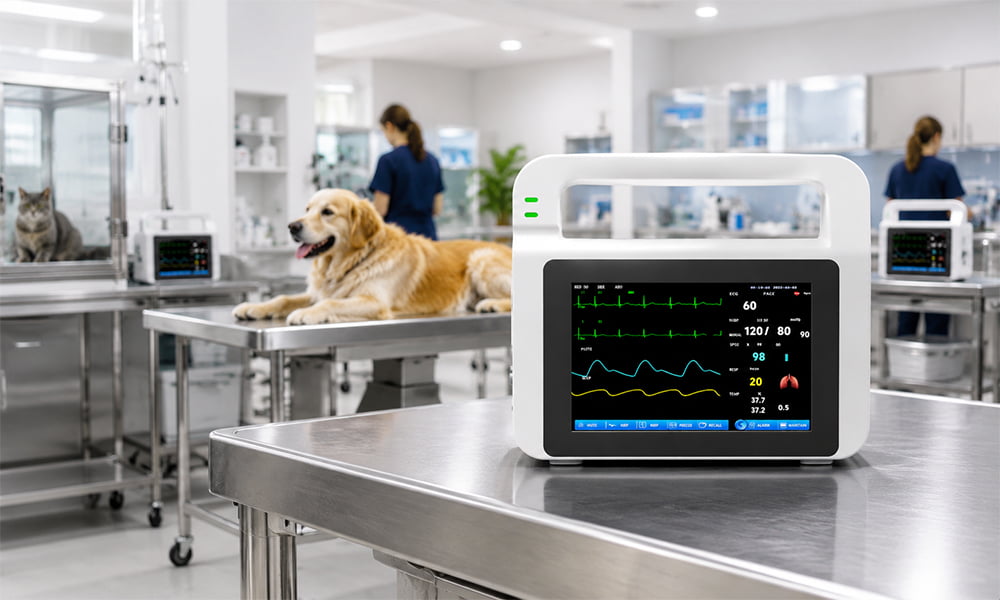
As veterinary hospitals continue to expand, equipment planning becomes a critical part of building an efficient and safe clinical workflow. One common question for growing animal hospitals is: How many veterinary patient monitors are actually needed?
Choosing the right number of monitoring devices is not simply about purchasing more equipment. The ideal setup depends on factors such as surgery volume, the number of operating rooms, recovery capacity, and critical care requirements.
A well-planned veterinary monitoring system helps clinics improve anesthesia safety, enhance postoperative care, and provide better support for emergency and intensive care patients.
Why Veterinary Hospitals Need a Monitoring Equipment Plan
For a small veterinary clinic, one patient monitor may be enough for routine procedures. However, as the hospital grows, relying on a single device can create workflow limitations.
Multiple procedures, emergency cases, and postoperative recovery monitoring often require dedicated equipment in different areas of the hospital.
A proper veterinary monitoring equipment plan allows hospitals to:
- Improve patient safety during anesthesia and surgery
- Reduce workflow interruptions between operating rooms and recovery areas
- Support emergency and critical care with continuous monitoring
- Prepare for future expansion as patient volume increases
How Many Veterinary Patient Monitors Does Your Hospital Need?
The required number of veterinary monitors depends mainly on the size of your facility and the type of services you provide.
Small Veterinary Clinic: 1-2 Veterinary Patient Monitors
For small animal clinics with one operating room and a limited number of daily procedures, one or two veterinary patient monitors are usually sufficient.
These monitors can support:
- Routine surgical procedures
- Anesthesia monitoring
- Postoperative recovery observation
- Emergency patient assessment
A portable veterinary monitor is especially useful for smaller clinics because it can be easily moved between consultation rooms, operating rooms, and recovery areas.
Growing Veterinary Hospital: 3-5 Veterinary Monitors
When a veterinary hospital begins performing more surgeries or operating multiple treatment areas, additional monitoring equipment becomes necessary.
A growing hospital may need dedicated monitors for:
- Operating rooms: Continuous monitoring during anesthesia and surgery
- Recovery rooms: Monitoring patients after anesthesia
- Emergency areas: Rapid evaluation of critical patients
At this stage, investing in reliable veterinary monitoring equipment helps maintain efficient patient flow and improves clinical safety.
Large Veterinary Medical Center: Complete Monitoring Solutions
Large veterinary hospitals and referral centers often require a more comprehensive monitoring strategy.
Their equipment configuration may include:
- Multiple veterinary patient monitors for different operating rooms
- Dedicated monitoring equipment for ICU and critical patients
- Portable monitors for patient transportation
- Integrated solutions with anesthesia and respiratory equipment
A scalable equipment system allows large facilities to handle higher patient volumes while maintaining consistent care standards.
Different Areas Require Different Veterinary Monitoring Solutions
Operating Room Monitoring
During surgery, patient monitoring is essential for evaluating vital signs and identifying potential risks during anesthesia.
Veterinary operating rooms commonly require monitoring of:
- Heart rate and ECG
- Blood oxygen saturation (SpO2)
- Blood pressure
- Body temperature
When combined with a veterinary anesthesia machine, a reliable monitoring system creates a safer anesthesia workflow for animal patients.
Recovery Room Monitoring
The recovery stage after anesthesia is one of the most important periods in veterinary care. Patients may experience changes in vital signs after surgery, making continuous observation necessary.
Portable veterinary monitors help veterinary teams track patient conditions during recovery and provide timely intervention when needed.
For clinics looking for flexible monitoring solutions,
OliveVet Portable Multiparameter Monitor VET-VE5
is designed for veterinary clinical applications with reliable monitoring performance and convenient mobility.
ICU and Critical Care Monitoring
Patients requiring intensive care often need continuous monitoring combined with additional supportive equipment.
A complete veterinary ICU solution may include:
- Veterinary patient monitors
- ICU incubators
- Ventilators
- Oxygen therapy equipment
By integrating these solutions, veterinary hospitals can provide a more controlled environment for critical patients.
Key Factors When Choosing Veterinary Monitoring Equipment
1. Monitoring Parameters
Different clinical applications require different monitoring capabilities. Before purchasing equipment, hospitals should consider whether the monitor supports essential parameters such as:
- ECG
- SpO2
- NIBP
- Temperature monitoring
2. Portability and Workflow Flexibility
Modern veterinary hospitals often require equipment that can be used in multiple locations.
Portable veterinary monitors provide flexibility by allowing medical teams to move equipment between operating rooms, recovery areas, and emergency departments.
3. Alarm and Data Management Functions
Reliable alarm systems and data review functions help veterinarians quickly identify abnormal patient conditions and make informed clinical decisions.
4. Future Expansion Capability
Veterinary equipment should not only meet current requirements but also support future growth.
Working with a supplier that provides multiple veterinary solutions allows hospitals to expand their equipment portfolio as their services develop.
Building a Complete Veterinary Surgery Equipment Workflow
A successful veterinary hospital requires more than individual devices. Equipment should work together as a complete clinical workflow.
- Before surgery: Patient assessment and vital sign monitoring
- During surgery: Anesthesia machine combined with veterinary monitoring equipment
- After surgery: Recovery monitoring and intensive care support
By creating an integrated workflow, veterinary hospitals can improve efficiency and provide safer patient care.
Why Choose OliveVet for Veterinary Monitoring Solutions?
OliveVet provides professional veterinary equipment solutions designed for animal clinics, hospitals, and global distributors.
Our product portfolio covers:
- Veterinary multiparameter monitors
- Veterinary anesthesia machines
- Veterinary ventilators
- Animal ICU incubators
- Complete veterinary surgical solutions
With reliable product quality, flexible supply solutions, and professional support, OliveVet helps veterinary professionals build efficient and modern clinical environments.
Frequently Asked Questions
How many veterinary monitors does a small animal clinic need?
Most small veterinary clinics can start with one or two portable veterinary patient monitors depending on surgery volume and patient monitoring requirements.
Why do veterinary hospitals need patient monitors during anesthesia?
Veterinary patient monitors help track vital signs during anesthesia and surgery, allowing veterinary teams to identify changes quickly and improve patient safety.
What is the difference between a veterinary monitor and a human patient monitor?
Veterinary monitors are designed specifically for animal clinical applications with suitable parameters, accessories, and workflows for veterinary procedures.
Need Help Planning Your Veterinary Equipment Setup?
Whether you are expanding an animal hospital or looking for veterinary equipment distribution opportunities, OliveVet can provide professional solutions based on your clinical requirements.
Contact us to discuss veterinary monitoring equipment, anesthesia solutions, and complete animal healthcare systems.