
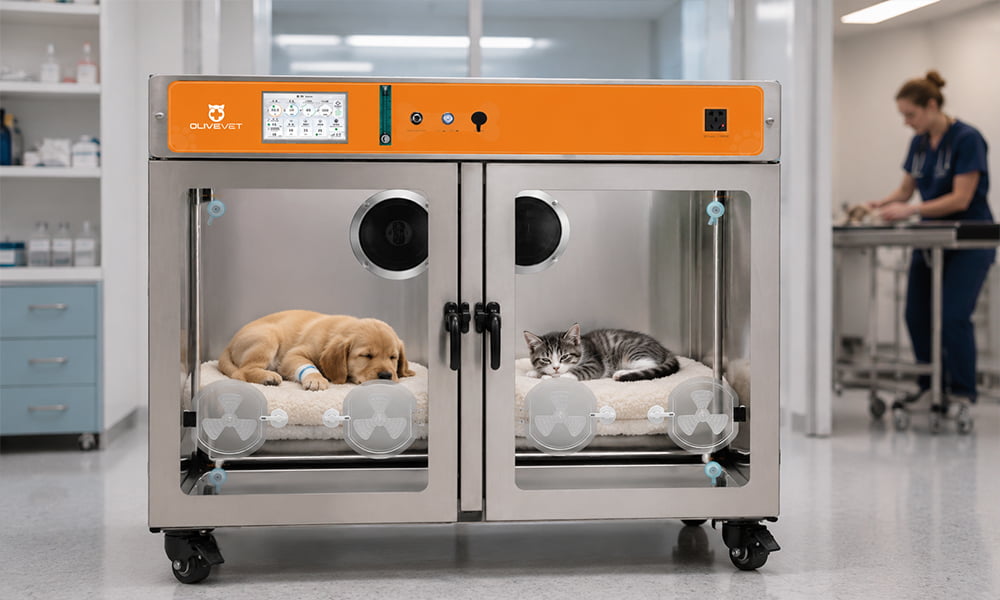
Successful veterinary surgery does not end when the procedure is completed. The recovery stage is equally important and can directly influence patient outcomes.
After surgery, animals often experience increased vulnerability due to anesthesia effects, stress responses, temperature changes, and respiratory challenges. Without proper postoperative support, even successfully completed surgeries may face recovery complications.
For veterinary clinics, providing a controlled and comfortable recovery environment is becoming an essential part of modern animal healthcare. Traditional recovery cages may support basic observation, but they often lack advanced functions required for critical patients.
This is why more veterinary hospitals are investing in professional veterinary postoperative care equipment, such as veterinary ICU incubators, to improve recovery management and provide better care for animals after surgery.
The Challenges of Postoperative Animal Recovery
Temperature Control Issues After Surgery
Maintaining stable body temperature is one of the most important aspects of postoperative care for animals.
After anesthesia and surgery, animals may have difficulty regulating their own body temperature. This is especially common in:
- Small dogs and cats
- Elderly animals
- Weak or critical patients
- Newborn animals
Traditional recovery cages usually provide a basic enclosed space but cannot actively maintain a stable recovery environment.
Common challenges include:
- Temperature fluctuations
- Increased recovery stress
- Slower patient stabilization
A controlled environment with adjustable temperature support can help veterinary teams provide safer postoperative care.
Oxygen Support Requirements During Recovery
Respiratory support is another important factor in animal recovery.
Some postoperative patients may experience:
- Reduced respiratory function after anesthesia
- Breathing difficulties
- Low oxygen levels
- Increased stress during recovery
Traditional cages generally cannot provide controlled oxygen therapy, making it difficult for veterinary professionals to manage patients requiring additional respiratory support.
Modern veterinary oxygen therapy equipment helps clinics create a more controlled environment where oxygen levels can be adjusted according to patient needs.
Continuous Monitoring Challenges
Postoperative animals often require close observation, especially during the first few hours after surgery.
Veterinary teams need to monitor:
- Recovery condition
- Breathing status
- Environmental conditions
- Patient behavior
However, conventional recovery areas may provide limited environmental control and require frequent manual observation.
For critical cases, professional veterinary critical care equipment can help clinics improve recovery management and provide more consistent care.
Why Traditional Recovery Cages May Not Be Enough
Traditional recovery cages are commonly used in veterinary clinics because they are simple and practical for routine cases. However, they may not provide enough support for animals requiring intensive postoperative care.
Compared with conventional cages, veterinary ICU incubators provide a more controlled recovery environment.
| Traditional Recovery Cage | Veterinary ICU Incubator |
|---|---|
| Basic enclosed space | Controlled recovery environment |
| Limited temperature management | Adjustable temperature control |
| No integrated oxygen support | Oxygen therapy capability |
| Manual observation required | Improved patient monitoring |
| Suitable for routine recovery | Designed for critical care applications |
For healthy animals recovering from simple procedures, traditional cages may be sufficient. However, for high-risk patients, advanced recovery equipment can provide additional support during the most vulnerable recovery period.
How Veterinary ICU Incubators Improve Animal Recovery
1. Controlled Temperature Environment
Temperature stability is one of the key benefits of a veterinary ICU incubator.
After surgery, maintaining a suitable environment helps support animals during recovery, especially those with reduced ability to regulate body temperature.
A professional ICU incubator provides:
- Stable temperature conditions
- Adjustable environmental settings
- A more comfortable recovery space
This makes it suitable for:
- Postoperative patients
- Small animals
- Weak animals
- Critical care cases
2. Oxygen Therapy Support for Critical Patients
Oxygen support is an important function for many postoperative and intensive care cases.
A veterinary ICU incubator with oxygen therapy capability allows clinics to provide a controlled oxygen environment for animals requiring respiratory assistance.
Benefits include:
- Adjustable oxygen concentration
- More stable oxygen delivery
- Reduced respiratory stress during recovery
For veterinary hospitals, combining oxygen therapy with controlled temperature management creates a more complete intensive care solution.
3. Better Recovery Management and Patient Comfort
A controlled ICU environment allows veterinary teams to manage postoperative recovery more effectively.
Compared with traditional recovery methods, ICU incubators help provide:
- Better environmental stability
- Improved patient observation
- More professional intensive care support
Which Veterinary Cases Benefit From ICU Incubators?
Veterinary ICU incubators are suitable for various clinical applications where animals require additional recovery support.
Small Animal Surgery Recovery
Dogs and cats may require additional monitoring after:
- Soft tissue surgery
- Orthopedic procedures
- Emergency operations
A controlled recovery environment helps veterinary teams provide safer postoperative care.
Respiratory Disease Patients
Animals suffering from respiratory conditions may benefit from oxygen-supported environments.
Examples include:
- Pneumonia cases
- Breathing difficulties
- Low oxygen conditions
Emergency and Critical Care
Emergency patients often require intensive monitoring and rapid intervention.
ICU incubators provide a suitable environment for:
- Trauma recovery
- Critical patients
- Intensive observation
Neonatal Animal Care
Newborn animals are especially sensitive to temperature changes and environmental conditions.
- Newborn puppies
- Newborn kittens
- Weak neonatal animals
Key Factors When Choosing Veterinary Postoperative Care Equipment
When selecting veterinary postoperative care equipment, veterinary hospitals should consider several important factors.
1. Temperature Control Accuracy
- Stable temperature management
- Adjustable settings
- Consistent environmental conditions
2. Oxygen Management Capability
- Oxygen concentration control
- Stable oxygen delivery
- Safe operation
3. Patient Size Compatibility
Equipment should support different animal sizes and recovery scenarios.
4. Cleaning and Maintenance
- Easy-to-clean surfaces
- Practical daily maintenance
- Durable construction
5. Supplier Experience and Support
- Product quality
- Manufacturing capability
- Technical support
- After-sales service
Building a Better Veterinary Recovery Environment With OliveVet
Modern veterinary hospitals require equipment that supports not only treatment but also patient recovery.
OliveVet provides professional veterinary ICU incubator solutions designed for animal hospitals, emergency clinics, and veterinary healthcare providers.
Our ICU incubator solutions help veterinary professionals create a more controlled recovery environment with features including:
- Temperature Control: Providing stable environmental conditions to support postoperative recovery.
- Oxygen Therapy Support: Helping clinics provide respiratory assistance for animals requiring additional care.
- Intensive Care Applications: Suitable for veterinary hospitals, emergency clinics, and critical care environments.
With a focus on reliable veterinary equipment solutions, OliveVet supports global partners looking to improve their animal healthcare capabilities.
Frequently Asked Questions About Veterinary ICU Incubators
Why is postoperative care important in veterinary clinics?
Postoperative care helps animals recover safely by maintaining stable conditions, supporting vital functions, and allowing veterinary teams to monitor patients effectively.
What equipment is used for animal surgery recovery?
Common veterinary recovery equipment includes ICU incubators, oxygen therapy systems, monitoring devices, and recovery cages.
How does an ICU incubator help animals after surgery?
A veterinary ICU incubator provides controlled temperature, oxygen support, and a stable recovery environment compared with traditional cages.
Who needs veterinary ICU incubators?
Veterinary hospitals, emergency clinics, and animal care facilities treating postoperative or critical patients can benefit from ICU incubators.
Conclusion
Veterinary surgery success depends not only on the operation itself but also on effective postoperative management.
During recovery, animals may require stable temperature conditions, oxygen support, and continuous monitoring. Traditional recovery cages may not provide enough support for critical cases.
By offering a controlled environment, oxygen therapy capability, and improved recovery management, veterinary ICU incubators help clinics provide safer and more professional animal care.
For veterinary hospitals and distributors searching for reliable veterinary postoperative care equipment, OliveVet provides advanced ICU incubator solutions designed to support modern veterinary intensive care needs.