
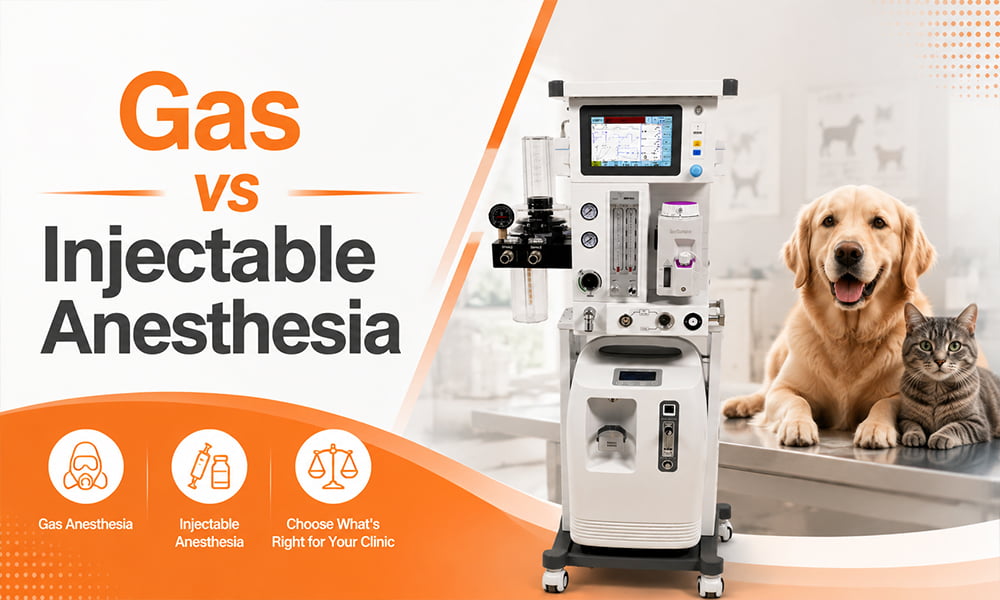
Multi-species veterinary clinics often treat different types of animals, including dogs, cats, and other small animals. Because each species may have different body sizes, health conditions, and surgical requirements, choosing the right veterinary anesthesia equipment is essential for safe and efficient procedures.
Anesthesia management directly affects patient safety, surgical efficiency, and recovery quality. For veterinary professionals, two common anesthesia approaches are widely used: gas anesthesia and injectable anesthesia.
While injectable anesthesia provides simplicity and convenience, gas anesthesia offers better control and flexibility for many surgical applications. Understanding the differences between these two methods can help veterinary clinics select the most suitable anesthesia solution.
This guide compares gas vs injectable anesthesia, explains their equipment requirements, and helps multi-species veterinary clinics choose the right anesthesia system.
Understanding Gas Anesthesia in Veterinary Practice
What Is Gas Anesthesia?
Gas anesthesia, also known as inhalation anesthesia, delivers anesthetic agents through a breathing system connected to the animal patient.
A complete gas anesthesia system usually includes:
- Veterinary anesthesia machine
- Oxygen supply system
- Vaporizer
- Breathing circuit
- Scavenging system
- Patient monitoring equipment
During the procedure, the anesthesia machine controls oxygen flow and anesthetic concentration, allowing veterinarians to adjust anesthesia levels according to the patient’s condition.
For professional veterinary hospitals and clinics performing regular surgeries, a reliable
veterinary anesthesia machine
is an important part of the operating environment.
Advantages of Gas Anesthesia
Better Control of Anesthesia Depth
One of the biggest advantages of gas anesthesia is precise control. Veterinarians can adjust anesthetic concentration during procedures, helping maintain an appropriate anesthesia level based on the patient’s response.
This flexibility is especially valuable for:
- Long surgical procedures
- Complex operations
- Multi-species veterinary practices
Suitable for Long Surgical Procedures
Gas anesthesia is commonly used for procedures that require stable anesthesia maintenance, including:
- Soft tissue surgery
- Orthopedic procedures
- Veterinary dental treatments
- Advanced surgical operations
Compared with injectable methods, gas anesthesia allows easier adjustment throughout the procedure.
More Predictable Recovery Management
Because anesthetic delivery can be adjusted during treatment, gas anesthesia provides better control over the recovery process.
This is especially important for:
- Older animals
- High-risk patients
- Different animal species requiring customized anesthesia management
Understanding Injectable Anesthesia
What Is Injectable Anesthesia?
Injectable anesthesia involves administering anesthetic medication through injection. It is commonly used for short procedures, minor treatments, and basic sedation.
For smaller veterinary practices or procedures that do not require long anesthesia periods, injectable anesthesia can be a practical option.
Advantages of Injectable Anesthesia
Simple Operation
Injectable anesthesia does not require complex equipment, making it easier to implement in clinics with limited surgical requirements.
Lower Equipment Requirements
Compared with a complete gas anesthesia system, injectable anesthesia requires fewer supporting devices.
It can be suitable for:
- Small veterinary clinics
- Basic procedures
- Initial practice setups
Convenient for Short Procedures
For quick procedures where precise anesthesia adjustment is less critical, injectable anesthesia provides an efficient solution.
Gas vs Injectable Anesthesia: Key Differences
The choice between gas and injectable anesthesia depends on the clinic’s procedures, patient types, and equipment requirements.
| Comparison | Gas Anesthesia | Injectable Anesthesia |
|---|---|---|
| Administration | Delivered through inhalation system | Delivered through injection |
| Control | High adjustability and precise control | Limited adjustment after administration |
| Equipment Requirement | Requires anesthesia machine and supporting equipment | Requires minimal equipment |
| Best Application | Surgery and longer procedures | Short procedures and sedation |
| Suitable Clinics | Hospitals and professional veterinary clinics | Small clinics and basic applications |
Equipment Requirements for Multi-Species Veterinary Clinics
For clinics treating multiple animal species, selecting the right equipment is more important than simply choosing an anesthesia method.
A complete anesthesia solution should support different patient sizes, procedure types, and clinical environments.
1. Veterinary Anesthesia Machine
A professional veterinary anesthesia machine is the core component of a gas anesthesia system.
Important equipment considerations include:
- Stable anesthetic gas delivery
- Accurate flow control
- Compatibility with different breathing circuits
- Easy operation for veterinary professionals
Flexible anesthesia equipment helps multi-species clinics provide safer and more efficient anesthesia management.
2. Oxygen Supply System
A stable oxygen source is essential for gas anesthesia performance.
Common oxygen supply options include:
- Oxygen concentrators
- Oxygen cylinders
- Central oxygen systems
Reliable oxygen delivery helps maintain consistent anesthesia performance during veterinary procedures.
3. Patient Monitoring Equipment
Safe anesthesia management requires continuous monitoring of vital signs.
Veterinary clinics commonly monitor:
- ECG
- SpO₂
- Blood pressure
- Respiratory rate
- Temperature
Combining a veterinary anesthesia machine with a professional
veterinary patient monitor
helps veterinarians evaluate patient conditions during surgery.
Which Anesthesia System Is Better for Multi-Species Veterinary Clinics?
There is no single anesthesia solution suitable for every veterinary practice. The right choice depends on the clinic’s workflow, animal types, and procedure requirements.
Gas Anesthesia Is Recommended For:
- Veterinary hospitals
- Surgical centers
- Clinics performing frequent operations
- Veterinary dental procedures
- Multi-species practices
Its main advantages include better control, flexibility, and suitability for complex procedures.
Injectable Anesthesia May Be Suitable For:
- Small veterinary clinics
- Short procedures
- Basic sedation
- Limited surgical applications
How to Choose the Right Veterinary Anesthesia Equipment?
1. Consider Animal Types
Multi-species clinics should select equipment that can support different animals and procedure requirements.
Important considerations include:
- Common animal species
- Patient size range
- Daily clinical applications
2. Evaluate Procedure Requirements
Before purchasing animal anesthesia equipment, clinics should evaluate:
- Surgery frequency
- Average procedure duration
- Required monitoring level
3. Choose Scalable Equipment
Veterinary practices continue to grow and expand. Selecting reliable equipment that supports future needs can help clinics:
- Improve service capability
- Support more procedures
- Reduce replacement costs
Why Veterinary Clinics Choose Professional Anesthesia Systems
Professional anesthesia equipment helps veterinary clinics create a safer and more efficient surgical environment.
A complete veterinary anesthesia solution can provide:
- Stable anesthesia delivery
- Better patient monitoring
- Improved surgical workflow
- Support for different animal species
For veterinary hospitals, clinics, and distributors, investing in reliable veterinary anesthesia equipment can improve clinical capabilities and long-term operational efficiency.
Conclusion
Both gas anesthesia and injectable anesthesia have their own advantages, and the best choice depends on the clinic’s application requirements.
Injectable anesthesia provides simplicity and convenience for short procedures, while gas anesthesia offers better control and flexibility for surgeries and multi-species veterinary practices.
For veterinary clinics that perform regular surgeries or treat different animal species, a professional
veterinary anesthesia machine
combined with reliable monitoring equipment can provide a complete anesthesia solution.
Choosing the right anesthesia system is not only about equipment selection, but also about improving patient safety, clinical efficiency, and veterinary care quality.