
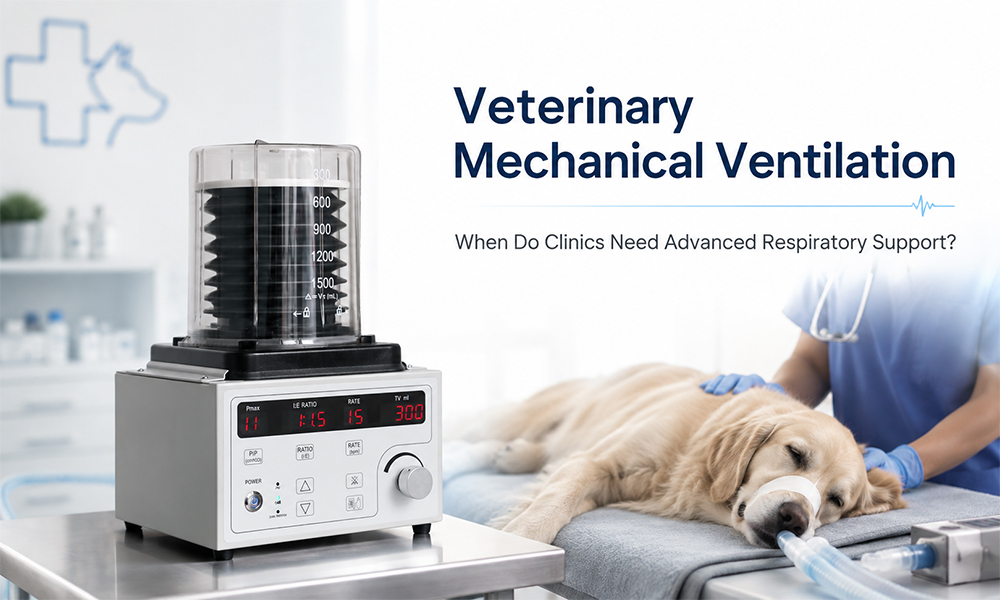
In modern veterinary medicine, more clinics are performing complex surgical procedures and providing advanced critical care services. While many veterinary anesthesia machines include basic ventilation functions, they may not always meet the respiratory support requirements of high-risk patients or long-duration procedures.
Veterinary mechanical ventilation provides controlled respiratory assistance to help maintain adequate oxygenation and ventilation when animals cannot breathe effectively on their own. It plays an important role in veterinary surgery, anesthesia management, emergency treatment, and intensive care.
For general procedures, anesthesia machine ventilation may be sufficient. However, when a veterinary practice expands its surgical capabilities or treats critically ill animals, a dedicated mechanical ventilation system can provide more precise control, improved patient safety, and more reliable respiratory support.
What Is Veterinary Mechanical Ventilation?
Veterinary mechanical ventilation is a respiratory support technique that uses a mechanical device to assist or completely control an animal’s breathing. The system delivers controlled airflow and oxygen into the lungs while regulating important respiratory parameters such as tidal volume, respiratory rate, and airway pressure.
During anesthesia, many animals experience reduced respiratory function because anesthetic drugs can suppress natural breathing. In some cases, spontaneous breathing is not enough to maintain proper oxygen exchange, making mechanical ventilation necessary.
A veterinary mechanical ventilation system helps support:
- Controlled breathing during surgery
- Stable oxygen delivery
- Improved ventilation efficiency
- Respiratory management for critical patients
For small animals such as dogs and cats, precise ventilation control is especially important because their smaller body size and respiratory systems require accurate parameter adjustment.
Why Is Mechanical Ventilation Important in Veterinary Medicine?
Maintain Stable Oxygen Supply During Surgery
General anesthesia can affect an animal’s respiratory system by reducing respiratory rate and decreasing lung ventilation. During longer or more complicated procedures, relying only on spontaneous breathing may increase the risk of insufficient oxygen exchange.
Veterinary mechanical ventilation helps maintain stable respiratory function by controlling airflow and supporting consistent oxygen delivery throughout the procedure.
This is particularly valuable during:
- Long-duration surgeries
- Thoracic procedures
- Complex orthopedic operations
- Advanced dental surgeries
By maintaining stable ventilation, veterinary teams can focus on the procedure while reducing respiratory-related risks.
Support Critical and High-Risk Patients
Not all veterinary patients have normal respiratory function. Animals suffering from respiratory diseases, trauma, or severe conditions may require additional breathing assistance.
Mechanical ventilation can provide respiratory support for animals experiencing:
- Respiratory insufficiency
- Reduced oxygen levels
- Postoperative breathing difficulties
- Emergency conditions
For veterinary hospitals offering emergency and intensive care services, reliable respiratory support equipment is becoming an essential part of patient management.
Improve Safety During Long Procedures
Long anesthesia periods place additional stress on an animal’s respiratory system. Without sufficient ventilation support, carbon dioxide accumulation and inadequate oxygenation may occur.
A dedicated ventilation system allows veterinary professionals to adjust ventilation parameters according to patient conditions, helping maintain stable respiratory performance throughout lengthy procedures.
Veterinary Mechanical Ventilation vs Anesthesia Machine Ventilation
Many veterinary clinics already use anesthesia machines with built-in ventilation functions. However, there are important differences between basic anesthesia ventilation and dedicated mechanical ventilation systems.
| Feature | Anesthesia Machine Ventilation | Veterinary Mechanical Ventilation System |
|---|---|---|
| Main Purpose | Anesthesia delivery and basic breathing support | Advanced respiratory support |
| Ventilation Control | Basic control options | Precise parameter adjustment |
| Long Procedures | Suitable for routine cases | Better for complex procedures |
| Critical Patients | Limited application | Designed for respiratory support |
| ICU Applications | Limited | Suitable for intensive care |
An anesthesia machine remains an important tool for routine veterinary procedures. However, when a clinic performs advanced surgeries, treats unstable patients, or provides critical care, a dedicated veterinary mechanical ventilation system can provide additional capabilities.
When Does a Veterinary Clinic Need Mechanical Ventilation?
1. During Complex Surgical Procedures
Advanced surgeries often require stable respiratory management because patients may remain under anesthesia for extended periods.
Veterinary mechanical ventilation is especially beneficial for:
- Thoracic surgery
- Abdominal surgery
- Orthopedic procedures
- Minimally invasive surgery
- Complex dental procedures
During these procedures, precise control of ventilation parameters helps maintain consistent respiratory support.
2. For Small Animals Under General Anesthesia
Small animals, including cats and dogs, can be more sensitive to changes in respiratory function during anesthesia.
Mechanical ventilation for small animals helps veterinary teams manage:
- Tidal volume
- Respiratory rate
- Airway pressure
- Oxygen exchange
Accurate ventilation control is particularly important for smaller patients where excessive or insufficient ventilation may affect treatment outcomes.
3. In Veterinary ICU and Emergency Care
Veterinary hospitals providing emergency and intensive care services often require advanced respiratory support equipment.
Mechanical ventilation can assist in managing patients experiencing:
- Respiratory distress
- Severe illness
- Postoperative complications
- Trauma recovery
4. When Clinics Expand Advanced Surgical Services
As veterinary practices grow, many clinics move beyond routine procedures and begin offering specialized medical services.
Investing in veterinary mechanical ventilation can support clinics that provide:
- Advanced surgery
- Emergency medicine
- Intensive monitoring
- Referral services
Key Features to Consider in a Veterinary Mechanical Ventilation System
Precise Ventilation Control
A reliable veterinary mechanical ventilation system should provide accurate control over respiratory parameters, including:
- Tidal volume adjustment
- Respiratory rate control
- Airway pressure management
Suitable for Different Animal Sizes
Veterinary equipment should be designed for the specific needs of animal patients.
- Small animal procedures
- Different body sizes
- Various surgical applications
Safety Monitoring and Alarm Functions
Patient safety is a major consideration during mechanical ventilation.
- Pressure monitoring
- Abnormal ventilation alerts
- Safety alarm systems
Easy Operation for Veterinary Teams
Veterinary clinics need equipment that improves workflow rather than increasing complexity.
- Clear parameter display
- Simple operation process
- Efficient adjustment during procedures
Why Choose OliveVet VET-60V for Veterinary Mechanical Ventilation?
The
OliveVet VET-60V Veterinary Ventilator
is designed to provide reliable respiratory support for animal hospitals, veterinary clinics, and surgical centers.
It supports veterinary professionals during:
- Surgical procedures
- Anesthesia applications
- Critical care management
- Long-duration operations
Advanced Respiratory Support
The VET-60V provides controlled mechanical ventilation to help maintain stable respiratory conditions during veterinary procedures.
Its adjustable ventilation parameters allow veterinary teams to optimize respiratory support based on patient requirements.
Designed for Small Animal Applications
The VET-60V is suitable for small animal practices that treat common companion animals such as dogs and cats.
- Stable ventilation performance
- Flexible parameter adjustment
- Reliable respiratory assistance
How to Choose the Right Veterinary Mechanical Ventilation Solution?
Before purchasing a ventilation system, veterinary clinics should consider:
- Animal Size Compatibility: Ensure the equipment supports the animal types commonly treated in the clinic.
- Ventilation Control Capability: Check whether the system provides accurate adjustment of key respiratory parameters.
- Monitoring Features: Reliable monitoring and alarm functions improve patient safety.
- Equipment Reliability: Veterinary equipment should provide stable performance for daily clinical applications.
- Supplier Support: Choosing an experienced veterinary equipment manufacturer ensures better technical support.
Conclusion
Veterinary mechanical ventilation has become increasingly important as veterinary clinics provide more advanced surgical procedures and critical care services.
While anesthesia machine ventilation can meet the needs of routine procedures, dedicated mechanical ventilation provides more precise respiratory control for complex surgeries, high-risk patients, and intensive care applications.
Explore the
OliveVet VET-60V Veterinary Ventilator
for a professional veterinary mechanical ventilation solution designed for modern animal hospitals, surgical centers, and veterinary clinics.