
Launching a veterinary clinic is an exciting step, but it also comes with significant planning and investment decisions. One of the most important aspects of building a successful practice is veterinary equipment planning. The equipment you choose will directly impact patient care, staff efficiency, service capabilities, and long-term profitability.
Whether you are opening a small companion animal clinic or planning a full-service veterinary hospital, a strategic approach to equipment selection can help you avoid unnecessary expenses while ensuring you are prepared to meet your patients’ needs.
In this guide, we will walk through the essential equipment required for different areas of a veterinary clinic—from the consultation room to the surgery suite—and provide practical tips for building an efficient and scalable facility.
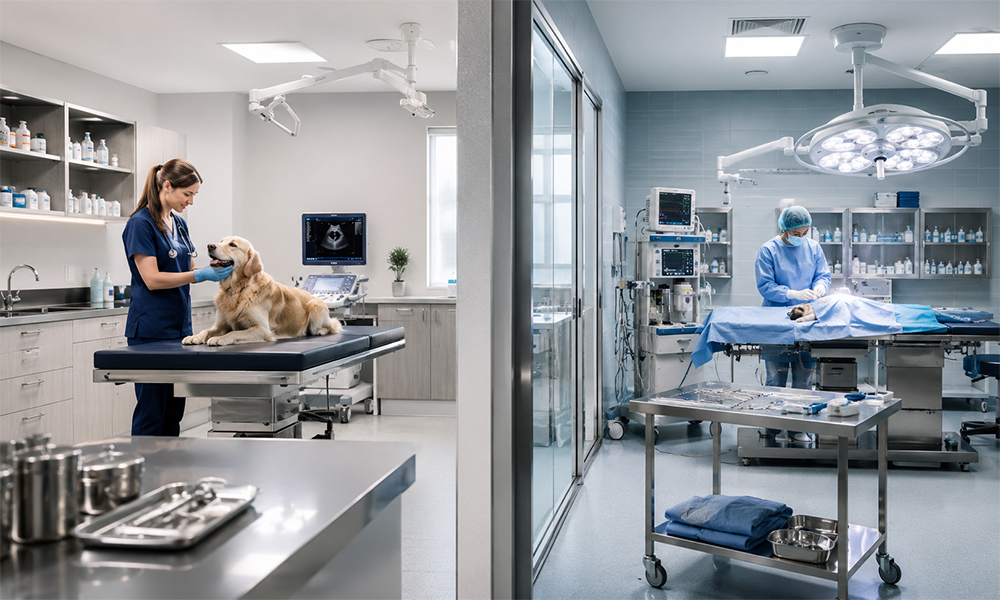
Why Veterinary Equipment Planning Is Critical for Startup Clinics
Many new veterinary practices make the mistake of purchasing equipment based solely on price or immediate needs. Without a clear plan, clinics often end up with underutilized equipment, workflow inefficiencies, or costly upgrades shortly after opening.
Effective veterinary equipment planning helps clinics:
- Optimize startup budgets
- Improve patient care and safety
- Enhance workflow efficiency
- Reduce future replacement costs
- Support long-term business growth
By carefully evaluating your clinic’s services, expected patient volume, and future expansion plans, you can make smarter equipment investments from the start.
Start with Your Clinic’s Service Scope
Before purchasing equipment, define the primary services your clinic intends to provide.
General Practice Clinics
General veterinary clinics typically focus on:
- Wellness exams
- Vaccinations
- Preventive care
- Routine diagnostics
- Basic treatments
Surgical Clinics
Clinics performing surgical procedures require additional investments in:
- Anesthesia systems
- Surgical lighting
- Ventilation support
- Patient monitoring equipment
Emergency and Critical Care Facilities
Emergency hospitals and specialty centers often need:
- Intensive care units
- Oxygen therapy systems
- Advanced monitoring solutions
- Diagnostic imaging equipment
Your service scope should guide every equipment purchasing decision.
Essential Equipment for the Consultation Room
The consultation room serves as the foundation of every veterinary clinic.
Veterinary Examination Table
A durable examination table provides a safe and comfortable space for physical examinations. Adjustable and stainless-steel models are particularly popular due to their ease of cleaning and long service life.
Veterinary Multi-Parameter Monitor
Patient monitoring begins during routine examinations and becomes even more critical during treatment and surgery.
A veterinary monitor typically tracks:
- ECG
- Blood Pressure
- SpO₂
- Respiratory Rate
- Temperature
Reliable monitoring allows veterinarians to detect potential health concerns early and improve treatment outcomes.
Veterinary Diagnostic Tools
Common diagnostic tools include:
- Otoscopes
- Ophthalmoscopes
- Digital Thermometers
- Stethoscopes
- Examination Lights
Equipment Needed for the Treatment Area
The treatment area handles fluid therapy, medication administration, and patient stabilization.
Infusion and Fluid Management Systems
Accurate fluid delivery is essential for many veterinary patients.
- Veterinary Syringe Pumps
- Veterinary Infusion Pumps
- Fluid Warming Systems
These devices help ensure precise medication administration and consistent patient care.
Veterinary Oxygen Concentrator
Oxygen therapy plays a crucial role in treating patients experiencing respiratory distress, recovering from surgery, or suffering from chronic conditions.
Benefits of a Veterinary Oxygen Concentrator include:
- Continuous oxygen supply
- Reduced dependence on oxygen cylinders
- Lower operating costs
- Improved patient recovery support
Building an Efficient Veterinary Surgery Suite
The surgery suite is often one of the most equipment-intensive areas of a veterinary clinic.
Veterinary Anesthesia Machine
A Veterinary Anesthesia Machine is essential for safe surgical procedures.
Modern systems provide:
- Precise anesthetic delivery
- Stable oxygen flow
- Enhanced patient safety
- Compatibility with Isoflurane and Sevoflurane
Veterinary Ventilator
Mechanical ventilation is often required during lengthy or complex procedures.
A Veterinary Ventilator can:
- Support respiratory function
- Maintain stable ventilation
- Reduce anesthetic risks
- Improve patient safety during surgery
Veterinary Surgical Light
Proper illumination is critical for surgical precision.
Key features of a Veterinary Surgical Light include:
- Shadowless illumination
- Adjustable brightness
- High color rendering index (CRI)
- Flexible positioning
Veterinary Electrosurgical Unit
Electrosurgical units help improve surgical efficiency by allowing:
- Tissue cutting
- Coagulation
- Reduced bleeding
- Shorter procedure times
Critical Care Equipment for Post-Operative Recovery
Post-operative care is just as important as the surgical procedure itself.
Veterinary ICU Cabin
A Veterinary ICU Cabin provides a controlled recovery environment for critically ill or post-surgical patients.
Key features include:
- Temperature regulation
- Humidity control
- Oxygen therapy integration
- Nebulization functions
- Noise reduction
Continuous Monitoring Systems
Critical care patients require ongoing monitoring of vital signs.
- ECG
- Blood Pressure
- SpO₂
- Respiratory Rate
- Body Temperature
Continuous monitoring allows veterinary staff to respond quickly to changes in patient condition.
Diagnostic Equipment for Future Expansion
As clinics grow, diagnostic capabilities often become a major area of investment.
Veterinary Digital X-Ray System
A Veterinary Digital X-Ray System provides fast and accurate imaging for diagnosing:
- Fractures
- Internal injuries
- Respiratory conditions
- Orthopedic disorders
Veterinary Ultrasound Equipment
Ultrasound systems support a wide range of diagnostic applications, including:
- Pregnancy examinations
- Abdominal evaluations
- Cardiac assessments
- Soft tissue imaging
Veterinary Equipment Planning by Budget
Budget Under $20,000
- Examination Table
- Diagnostic Tools
- Veterinary Monitor
- Oxygen Concentrator
- Basic Treatment Equipment
Budget $20,000–$50,000
- Veterinary Anesthesia Machine
- Surgical Light
- Syringe Pump
- Infusion Pump
- Electrosurgical Unit
Budget Over $50,000
- Veterinary ICU Cabin
- Veterinary Ventilator
- Digital X-Ray System
- Ultrasound Equipment
- Advanced Monitoring Systems
A phased purchasing strategy often allows clinics to balance immediate needs with future growth.
Common Equipment Planning Mistakes to Avoid
Buying Equipment Without a Growth Plan
Purchasing solely for current needs can result in costly upgrades later.
Choosing Price Over Reliability
Low-cost equipment may lead to higher maintenance costs and unexpected downtime.
Ignoring After-Sales Support
Technical support, training, and spare parts availability should be considered before making purchasing decisions.
Underestimating Critical Care Needs
Even small clinics can benefit from oxygen therapy and monitoring equipment for emergency situations.
How to Choose the Right Veterinary Equipment Supplier
Selecting the right supplier is just as important as selecting the equipment itself.
Look for suppliers that offer:
- CE-Certified Products
- Comprehensive Product Training
- Technical Support
- Warranty Coverage
- Spare Parts Availability
- Global Installation Experience
A reliable supplier can help ensure smooth operations and long-term equipment performance.
Conclusion
Successful veterinary equipment planning requires balancing budget, functionality, and future growth. By carefully evaluating your clinic’s service scope and prioritizing essential equipment, you can create an efficient facility that delivers high-quality patient care from day one.
From consultation rooms and treatment areas to advanced surgery suites and intensive care units, every equipment decision contributes to the overall success of your practice. Investing in reliable veterinary equipment today lays the foundation for a safer, more efficient, and more profitable veterinary clinic in the years ahead.