
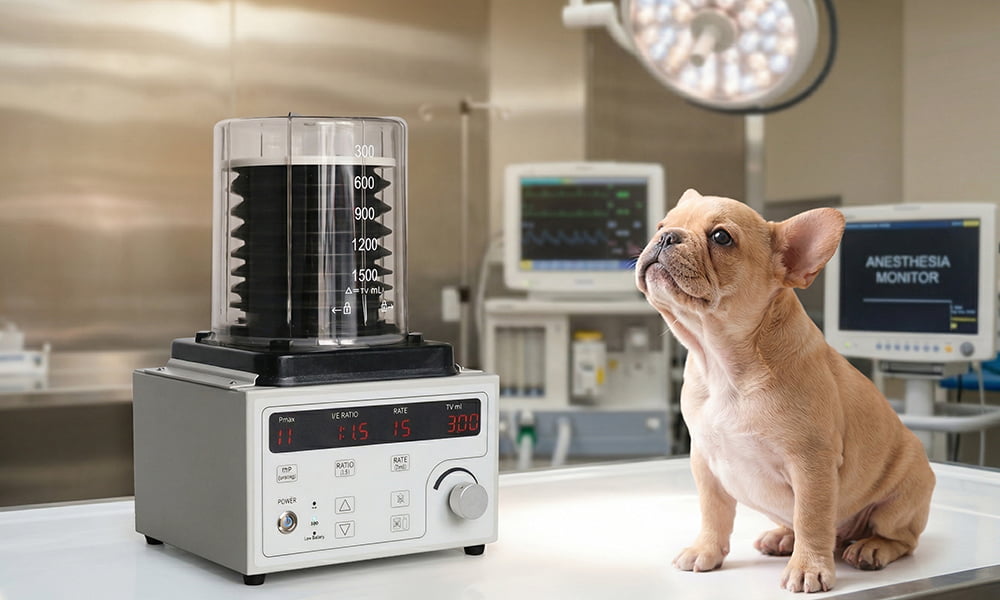
Veterinary anesthesia plays a critical role in modern animal healthcare, enabling safe and effective surgical procedures. However, one of the biggest risks during anesthesia is respiratory depression, which can compromise oxygen delivery and patient safety.
This is where mechanical ventilation becomes essential. By providing controlled breathing support, veterinary ventilators help maintain stable physiological conditions throughout surgery, significantly improving outcomes.
What Is Mechanical Ventilation in Veterinary Medicine?
Mechanical ventilation refers to the use of a machine to assist or fully control a patient’s breathing during anesthesia. In veterinary practice, it is commonly used when animals are unable to maintain adequate spontaneous respiration.
Modern veterinary ventilators regulate:
- Tidal Volume (air delivered per breath)
- Respiratory Rate (breaths per minute)
- Airway Pressure
Common ventilation modes include:
- Volume-Controlled Ventilation (VCV)
- Pressure-Controlled Ventilation (PCV)
Why Mechanical Ventilation Is Critical During Anesthesia
Mechanical ventilation is not just an optional tool—it is a key component of safe anesthesia management. Its benefits include:
- Prevents Hypoventilation: Ensures adequate breathing when anesthesia suppresses respiratory drive.
- Maintains Oxygenation: Provides consistent oxygen supply to vital organs.
- Controls CO₂ Levels: Prevents hypercapnia and maintains proper blood gas balance.
- Improves Surgical Stability: Keeps physiological parameters stable throughout procedures.
- Reduces Anesthetic Risk: Minimizes complications and improves overall patient safety.
Which Veterinary Patients Need Mechanical Ventilation?
Not all patients require mechanical ventilation, but it is strongly recommended in the following cases:
- Long-duration surgeries (orthopedic, abdominal, thoracic)
- Patients with respiratory diseases
- Geriatric animals
- Critical care or ICU patients
- Deep anesthesia procedures
In these situations, relying solely on spontaneous breathing can significantly increase risk.
Manual Ventilation vs Mechanical Ventilation
Many clinics still rely on manual ventilation, but this method has clear limitations compared to automated systems:
- Consistency: Manual ventilation is operator-dependent, while mechanical ventilation ensures precise control.
- Efficiency: Mechanical systems reduce workload for veterinary staff.
- Safety: Automated monitoring and alarms enhance patient safety.
Conclusion: Mechanical ventilation provides a more reliable and standardized approach to anesthesia care.
Key Features to Look for in a Veterinary Ventilator
When selecting a ventilator for your clinic, consider the following features:
- Accurate tidal volume control
- Adjustable respiratory rate
- Multiple ventilation modes
- Built-in alarm systems
- Compatibility with different animal sizes
👉 Learn more about our professional solutions:
Veterinary Ventilator Product Page
How Veterinary Ventilators Improve Clinical Outcomes
Investing in a high-quality veterinary ventilator can significantly improve clinical performance:
- Reduced intraoperative complications
- Higher surgical success rates
- Faster recovery times
- Enhanced clinic professionalism
These advantages not only benefit patients but also strengthen your clinic’s reputation and operational efficiency.
Choosing the Right Ventilator for Your Veterinary Clinic
Selecting the right equipment depends on your clinic’s needs:
- Animal types: Small animals vs large animals
- Procedure types: Routine vs complex surgeries
- ICU requirements: Continuous ventilation support
- Budget considerations: Cost vs functionality
- Supplier support: OEM, training, and after-sales service
If you are a distributor or clinic looking for reliable equipment, choosing an experienced manufacturer is essential.
Conclusion: Investing in Better Anesthesia Safety
Mechanical ventilation has become an indispensable part of modern veterinary anesthesia. By ensuring stable breathing, improving oxygenation, and reducing risks, it plays a crucial role in achieving successful surgical outcomes.
For veterinary clinics aiming to enhance patient safety and operational efficiency, investing in a high-quality veterinary ventilator is a smart and future-proof decision.
👉 Ready to upgrade your clinic?
- Request a Quote
- Contact Us
- OEM & Distributor Support Available
FAQ
Is mechanical ventilation necessary for all animal surgeries?
No, but it is highly recommended for complex, long-duration, or high-risk procedures where spontaneous breathing may not be sufficient.
What is the difference between a ventilator and an anesthesia machine?
An anesthesia machine delivers anesthetic gases, while a ventilator controls or assists breathing. They are often used together during surgery.
Can small veterinary clinics use ventilators?
Yes, many compact and cost-effective ventilators are designed specifically for small clinics and practices.
How do I choose a veterinary ventilator supplier?
Look for manufacturers that offer reliable quality, technical support, OEM services, and global distribution experience.