
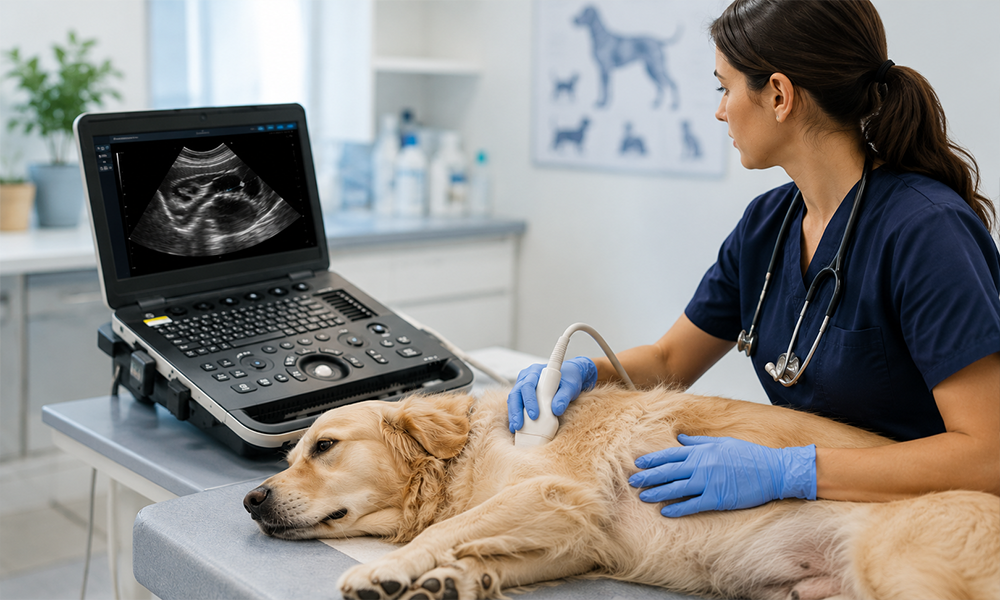
Veterinary ultrasound has become one of the most important diagnostic tools in modern animal healthcare. From pregnancy detection in livestock to cardiac examinations in pets, ultrasound technology helps veterinarians diagnose medical conditions quickly, safely, and non-invasively.
As veterinary clinics continue to adopt advanced imaging technologies, portable and high-performance veterinary ultrasound machines are now widely used in small animal hospitals, equine practices, and farm veterinary services.
In this article, we will explain what veterinary ultrasound is, how it works, its common applications, and how to choose the right veterinary ultrasound machine for your clinic or practice.
What Is Veterinary Ultrasound?
Veterinary ultrasound is a medical imaging technique that uses high-frequency sound waves to create real-time images of an animal’s internal organs and tissues.
Unlike X-rays, ultrasound does not use radiation. Instead, it produces images by sending sound waves into the body and receiving echoes reflected from tissues and organs.
Veterinary ultrasound is commonly used to examine:
- Abdomen
- Heart
- Liver
- Kidneys
- Bladder
- Soft tissues
- Blood vessels
- Reproductive organs
Because it is non-invasive and safe, veterinary ultrasound is widely used in both companion animal clinics and large animal veterinary practices.
How Does Veterinary Ultrasound Work?
Veterinary ultrasound machines work by transmitting high-frequency sound waves through a probe, also known as a transducer.
The process typically includes the following steps:
- Sound Wave Transmission — The probe sends sound waves into the animal’s body.
- Echo Reflection — Tissues and organs reflect echoes back to the probe.
- Signal Processing — The machine converts echoes into digital signals.
- Real-Time Imaging — Images are displayed instantly on the monitor.
Different tissues create different echo patterns. Fluids usually appear dark, while bones reflect stronger echoes.
This real-time imaging capability allows veterinarians to evaluate organ movement, blood flow, pregnancy development, and cardiac activity quickly and accurately.
Main Components of a Veterinary Ultrasound Machine
Ultrasound Probe
The probe is one of the most important components of the ultrasound system.
- Convex Probe — Commonly used for abdominal examinations and pregnancy diagnosis.
- Linear Probe — Suitable for tendons, superficial tissues, and musculoskeletal imaging.
- Micro-Convex Probe — Often used in small animal and cardiac applications.
Display System
High-resolution monitors help veterinarians observe anatomical structures more clearly and improve diagnostic confidence.
Imaging Software
Modern veterinary ultrasound systems often include advanced imaging functions such as:
- Image optimization
- Doppler imaging
- Measurement tools
- Image storage
- Freeze and playback functions
Portable Design
Portable veterinary ultrasound machines are increasingly popular because they are lightweight, flexible, and suitable for mobile veterinary services and farm visits.
Common Applications of Veterinary Ultrasound
Pregnancy Diagnosis
Ultrasound is widely used for pregnancy detection and fetal monitoring in animals.
- Dogs
- Cats
- Horses
- Cattle
- Sheep
- Pigs
Abdominal Examination
Veterinary ultrasound helps evaluate organs including:
- Liver
- Kidneys
- Spleen
- Bladder
- Gastrointestinal tract
It is commonly used to identify tumors, fluid accumulation, infections, stones, and organ enlargement.
Cardiac Examination
Cardiac ultrasound, also known as echocardiography, helps veterinarians evaluate heart structure and blood circulation.
Color Doppler imaging can further improve cardiovascular assessment.
Emergency and Critical Care
Portable ultrasound systems are highly valuable in emergency veterinary medicine because they allow rapid bedside imaging.
FAST ultrasound scans are commonly used to detect:
- Internal bleeding
- Abdominal fluid
- Pleural effusion
Large Animal Applications
Veterinary ultrasound is also widely used in livestock and equine medicine.
- Pregnancy detection in cattle
- Equine tendon examination
- Reproductive monitoring
- Farm herd management
Advantages of Veterinary Ultrasound
- Non-Invasive — No surgical procedure required.
- Radiation-Free — Safe for animals and operators.
- Real-Time Imaging — Instant visualization of organs and blood flow.
- Fast Diagnosis — Improves clinical efficiency.
- Portable and Flexible — Ideal for clinics and field use.
- Cost-Effective — Affordable diagnostic imaging solution.
Veterinary Ultrasound vs X-Ray
Both ultrasound and X-ray imaging are important diagnostic tools, but they serve different purposes.
- Ultrasound: Best for soft tissue and real-time imaging.
- X-Ray: Best for bone and skeletal evaluation.
- Ultrasound: Radiation-free and pregnancy-safe.
- X-Ray: Uses radiation exposure.
How to Choose the Right Veterinary Ultrasound Machine
Selecting the right veterinary ultrasound machine depends on your clinical needs and animal types.
- Animal Type — Small animals and livestock may require different probes and imaging capabilities.
- Probe Selection — Choose suitable probes for abdominal, cardiac, or musculoskeletal imaging.
- Portability — Portable systems are ideal for mobile veterinarians and farm visits.
- Image Quality — High-resolution imaging improves diagnostic accuracy.
- After-Sales Support — Reliable technical support and training are important.
Why Portable Veterinary Ultrasound Is Becoming More Popular
Portable veterinary ultrasound systems are becoming increasingly popular due to their flexibility and efficiency.
Modern veterinarians often require:
- Mobile imaging solutions
- Fast diagnosis
- Compact equipment
- Wireless functionality
Portable systems are especially valuable for:
- Equine veterinarians
- Farm veterinary services
- Emergency clinics
- Mobile veterinary practices
Frequently Asked Questions (FAQ)
Is veterinary ultrasound safe for animals?
Yes. Veterinary ultrasound is considered a safe and non-invasive imaging method because it does not use radiation.
What animals can be examined with ultrasound?
Veterinary ultrasound can be used for pets, livestock, horses, and many other animal species.
Can ultrasound detect pregnancy in animals?
Yes. Ultrasound is commonly used for pregnancy diagnosis and fetal monitoring in dogs, cats, cattle, horses, and pigs.
What is the difference between ultrasound and X-ray?
Ultrasound is mainly used for soft tissue imaging and real-time observation, while X-ray is more suitable for bone evaluation.
Why are portable veterinary ultrasound machines popular?
Portable systems are lightweight, easy to transport, and suitable for mobile veterinary services, farm visits, and emergency care.
Conclusion
Veterinary ultrasound plays a critical role in modern animal healthcare by providing safe, real-time, and non-invasive diagnostic imaging.
From pregnancy diagnosis to cardiac assessment and emergency care, ultrasound technology helps veterinarians improve diagnostic accuracy and treatment efficiency across a wide range of animal species.
If you are looking for advanced portable veterinary ultrasound solutions, you can explore our
Veterinary Ultrasound Machines
for professional veterinary imaging applications.
You may also be interested in our
Portable Veterinary Ultrasound Systems
designed for clinics, farms, and mobile veterinary practices.