
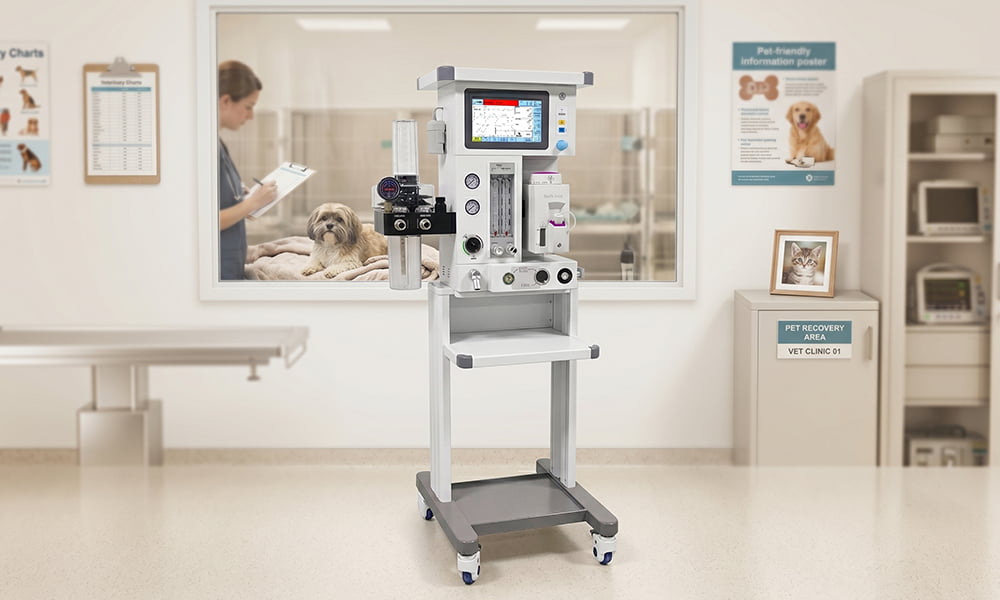
 Safe anesthesia is one of the most critical pillars of modern veterinary medicine. Whether performing routine sterilizations or complex surgical procedures, anesthesia safety directly impacts patient survival, recovery quality, and overall clinic performance.
In today’s veterinary environment, clinics are expected to deliver precise and controlled anesthesia management to ensure both safety and efficiency during surgery.
Why Safe Anesthesia Matters in Veterinary Clinics
Unlike human patients, animals cannot communicate pain or discomfort during surgery. This makes anesthesia management significantly more complex and risk-sensitive.
Poor anesthesia control may lead to:
- Respiratory depression
- Hypoxia (low oxygen levels)
- Cardiac complications
- Delayed recovery
- Anesthesia-related mortality
Therefore, safe anesthesia practices are essential in every veterinary clinic.
Common Challenges in Veterinary Anesthesia
Many veterinary clinics face operational challenges when managing anesthesia procedures.
- Unstable oxygen and gas delivery
- Limited real-time respiratory monitoring
- Separate and unintegrated equipment systems
- High staff workload during surgery
These challenges increase the risk of anesthesia-related complications if not properly addressed.
Key Principles of Safe Anesthesia Practice
To improve safety, veterinary clinics should follow several core principles:
- Accurate dosage control for consistent anesthesia depth
- Continuous monitoring of vital signs and oxygen levels
- Stable ventilation support during surgical procedures
- Integrated workflow systems to reduce human error
The Role of Modern Anesthesia Equipment
Modern veterinary anesthesia systems significantly improve safety by providing stable gas delivery, real-time monitoring, and automated ventilation support.
These systems reduce manual intervention and help veterinarians focus more on surgical procedures rather than equipment management.
Recommended Veterinary Anesthesia Machine
To achieve higher anesthesia safety standards, clinics are increasingly upgrading to integrated systems such as advanced veterinary anesthesia machines.
One recommended solution is the Veterinary Anesthesia Machine VET-V9, designed for modern veterinary surgical environments.
You can learn more about the product here:
VET-V9 Veterinary Anesthesia Machine
Key advantages include:
- Integrated anesthesia and ventilation system
- Real-time respiratory monitoring
- Stable oxygen delivery for different animal sizes
- Reduced operational errors during surgery
- Improved workflow efficiency in veterinary clinics
Traditional Anesthesia Systems vs VET-V9 Veterinary Anesthesia Machine
Understanding the difference between traditional anesthesia setups and modern integrated systems can help clinics make better investment decisions.
| Feature | Traditional Anesthesia System | VET-V9 Veterinary Anesthesia Machine |
|---|---|---|
| Gas Delivery Stability | Often inconsistent and manually controlled | Stable and precisely controlled delivery system |
| Ventilation Support | Manual ventilation required | Integrated ventilation system |
| Monitoring Capability | Limited or separate devices | Real-time integrated monitoring |
| Operational Risk | Higher risk of human error | Reduced error through automation |
| Workflow Efficiency | Multiple disconnected systems | All-in-one integrated design |
| Clinical Outcome | Variable and operator-dependent | More stable and predictable outcomes |
Clinical Benefits of Upgrading Anesthesia Systems
Upgrading to modern anesthesia systems provides measurable improvements in veterinary practice.
- Reduced anesthesia-related complications
- Faster surgical procedures
- Improved patient recovery outcomes
- Higher surgical success rates
- Enhanced client trust and clinic reputation
Frequently Asked Questions (FAQ)
Q1: Why is safe anesthesia important in veterinary clinics?
Safe anesthesia ensures stable vital signs during surgery, reduces complications such as hypoxia or cardiac issues, and improves overall surgical outcomes.
Q2: What are the risks of improper anesthesia in animals?
Improper anesthesia can lead to respiratory depression, unstable heart rate, delayed recovery, or in severe cases, anesthesia-related mortality.
Q3: What equipment is essential for safe veterinary anesthesia?
A veterinary anesthesia machine with integrated gas delivery, ventilation support, and real-time monitoring is essential for maintaining safety during procedures.
Q4: How does modern anesthesia equipment improve clinic efficiency?
Modern systems reduce manual ventilation work, stabilize anesthesia delivery, and allow veterinarians to focus more on surgical procedures.
Q5: Is the VET-V9 suitable for all animal sizes?
Yes. The VET-V9 is designed for a wide range of animals, including small pets and larger livestock, providing stable and adjustable anesthesia support.
Final Thoughts
Safe anesthesia practices are essential for every veterinary clinic aiming to improve surgical outcomes and patient safety.
By combining proper clinical protocols with advanced equipment like the VET-V9 veterinary anesthesia machine, clinics can significantly improve efficiency, safety, and overall quality of care.