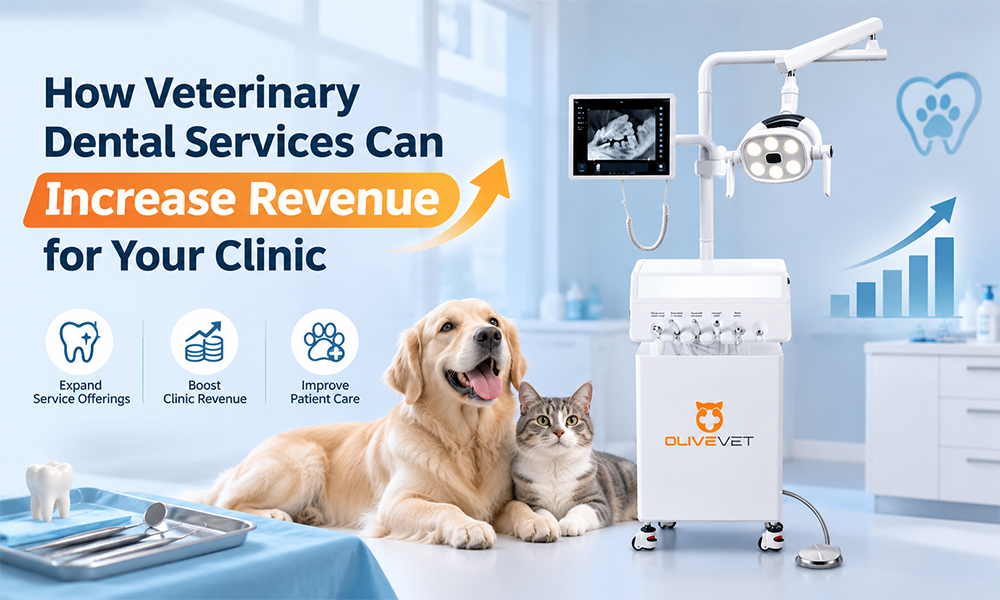
How Veterinary Dental Services Can Increase Revenue for Your Clinic
For veterinary clinics looking to grow their business, expanding into dental care can be a valuable opportunity. Pet owners are becoming increasingly aware of the importance of oral health, creating demand for professional veterinary dental examinations, cleaning, and treatment.
By introducing or expanding veterinary dental services, animal hospitals can provide more comprehensive patient care, attract additional treatment cases, and develop long-term relationships with pet owners. However, building a successful dental service requires more than simply adding new procedures. Clinics also need suitable equipment, an efficient treatment workflow, and a clear business strategy.
In this article, we explore how veterinary dental services can help increase clinic revenue, what equipment is needed to support dental procedures, and how choosing the right veterinary dental machine can help clinics establish a more complete dental treatment setup.
Why Should Veterinary Clinics Expand Their Dental Services?
Dental health is an important part of companion animal healthcare. Dogs and cats may experience various oral health problems throughout their lives, and some conditions require professional examination and treatment.
For veterinary clinics, dental care represents an opportunity to expand beyond traditional consultation and preventive care services. Instead of referring every dental case to another facility, clinics with the appropriate qualifications, facilities, and equipment may be able to manage a wider range of dental needs in-house.
There are several business reasons to consider expanding veterinary dentistry:
- More service opportunities: Dental examinations, professional cleaning, and other appropriate procedures can expand the clinic’s service portfolio.
- Better use of existing patients: Dental assessments can identify additional healthcare needs among the clinic’s current patient population.
- Stronger client relationships: Regular oral health assessments and follow-up visits create more opportunities to communicate with pet owners.
- Service differentiation: A clinic offering comprehensive dental care may stand out from practices providing only general veterinary services.
- Additional revenue streams: Dental procedures can contribute to the clinic’s overall service revenue.
The key is to build dental services around actual patient needs and the clinic’s clinical capabilities, rather than simply adding procedures to increase sales.
5 Ways Veterinary Dental Services Can Increase Clinic Revenue
1. Expand Your Clinic’s Treatment Options
One of the most straightforward ways to create new revenue opportunities is to offer services that are not currently part of your clinic’s treatment portfolio.
Many veterinary practices focus on general consultations, vaccinations, preventive healthcare, and surgical services. Introducing veterinary dentistry allows clinics to address additional oral health needs and provide more comprehensive care.
Depending on the veterinarian’s qualifications, training, and available equipment, a clinic may consider offering:
- Routine oral examinations
- Professional dental scaling and cleaning
- Dental polishing
- Selected dental treatments and procedures
- Post-treatment oral health assessments
- Dental care consultations and follow-up appointments
These services give existing clients more reasons to choose your clinic when their pets need dental care. They may also attract new pet owners who are specifically looking for veterinary dental services.
Business opportunity: Expanding your treatment options allows your clinic to serve more patient needs and develop additional sources of service revenue.
2. Increase the Average Revenue per Patient
Dental care can create opportunities to provide multiple related services during a patient’s treatment journey.
For example, during a routine examination, a veterinarian may identify dental concerns that require further assessment. When clinically appropriate, the clinic can recommend a suitable dental treatment plan.
A patient’s dental care journey may include:
- Initial oral examination and assessment
- Professional dental cleaning, when indicated
- Additional dental treatment, if necessary
- Post-procedure monitoring and follow-up
- Home dental care recommendations
Each appropriate service represents a potential source of revenue. More importantly, the clinic can provide continuous care instead of treating every visit as an isolated consultation.
To support these services, clinics need reliable equipment that can handle the dental procedures they intend to offer. A properly configured veterinary dental unit can bring several commonly used treatment functions together, helping the team organize its daily dental workflow.
Business opportunity: A well-planned dental treatment program can increase the range of appropriate services provided to each patient.
3. Encourage Repeat Visits Through Preventive Dental Care
Veterinary dentistry is not always a one-time service. Depending on an animal’s oral health, age, breed, and individual clinical condition, regular dental assessments and ongoing care may be recommended.
This gives clinics opportunities to maintain long-term relationships with pet owners through:
- Periodic dental examinations
- Professional cleaning when recommended
- Post-treatment follow-up appointments
- Home dental care guidance
- Reminders for future oral health assessments
For example, after a dental procedure, the clinic can arrange an appropriate follow-up appointment to assess recovery and discuss preventive care with the owner.
Consistent communication helps pet owners better understand their animals’ oral health needs and encourages them to return for future veterinary care.
Business opportunity: A structured dental care program can support repeat visits, improve client retention, and create more consistent service opportunities.
4. Improve Treatment Workflow with Integrated Dental Equipment
Expanding dental services also means managing equipment, staff time, and treatment space more effectively. If dental procedures require staff to switch between multiple separate devices, the workflow may become unnecessarily complicated.
An integrated veterinary dental unit can help organize commonly used functions in one treatment platform. Depending on its configuration, it may combine:
- High-speed and low-speed dental handpieces
- Ultrasonic scaling
- Dental polishing functions
- Water flushing and suction
- Oral examination and imaging support
For clinics planning to establish or upgrade a dental treatment area, the OliveVet VET-DU02 Veterinary Dental Machine is designed to bring several of these functions together.
The VET-DU02 features high-speed and low-speed handpieces, an LED ultrasonic scaler, a suction system, and a 17-inch touchscreen with an intraoral imaging system. Its integrated configuration supports different stages of veterinary dental treatment and helps organize equipment within the treatment area.
Why this matters for clinics: Having commonly used dental functions integrated into one unit can make equipment management more convenient and help staff organize daily procedures. Actual workflow improvements will depend on staff training, treatment volume, and clinic setup.
Explore the OliveVet VET-DU02 Veterinary Dental Machine to review its functions, configuration, and technical specifications.
5. Attract More Dental Cases Through Client Education
Some pet owners may not recognize the signs of oral health problems or understand when professional dental care is necessary. This creates an opportunity for veterinary clinics to improve client education.
Clinics can promote dental awareness and communicate their services through:
- Educational articles about pet oral health on the clinic website
- Social media posts explaining common dental problems
- Dental care information during routine consultations
- Appropriate clinical images and examination records
- Guidance on home oral hygiene and preventive care
For clinics with dedicated dental equipment, showing pet owners how professional dental examinations and procedures are performed can also help them better understand the value of the service.
In addition, a dedicated dental service page can introduce available procedures, explain the clinic’s capabilities, and make it easier for pet owners to request appointments.
Business opportunity: Better client education can increase awareness of dental services, support informed treatment decisions, and help clinics build trust with their communities.
What Equipment Does a Veterinary Clinic Need to Start Dental Services?
Introducing veterinary dental services requires appropriate equipment, clinical facilities, and trained personnel. The specific setup will depend on the procedures the clinic intends to perform and its expected patient volume.
For clinics planning to establish a dedicated dental treatment area, the following equipment categories are worth considering.
1. Veterinary Dental Unit
A veterinary dental unit is one of the central pieces of equipment in a dental treatment area. Depending on its configuration, it can integrate several functions used during dental procedures, including scaling, polishing, cutting, grinding, flushing, and suction.
An integrated unit can reduce the need to arrange multiple separate devices and help keep commonly used dental functions accessible during treatment.
For clinics seeking an integrated solution, the OliveVet VET-DU02 Veterinary Dental Machine provides a combination of dental treatment functions in one platform.
2. High-Speed and Low-Speed Dental Handpieces
Different dental procedures require different instruments and operating speeds. High-speed and low-speed handpieces support different dental treatment applications and should be selected according to the clinic’s clinical requirements.
The VET-DU02 includes both high-speed and low-speed handpieces, allowing veterinary professionals to use the appropriate handpiece for different procedures.
3. Ultrasonic Scaler
An ultrasonic scaler is commonly used for professional dental scaling. It helps remove deposits from tooth surfaces during appropriate dental cleaning procedures.
The VET-DU02 features an LED ultrasonic scaler operating at 28 kHz, providing an integrated scaling function within the dental unit.
4. Suction and Water Flushing Systems
Dental procedures can involve fluids and debris that need to be managed during treatment. Suction and water flushing functions help support the treatment process and maintain a more organized working area.
The VET-DU02 integrates a suction system and flushing functions as part of its dental treatment configuration.
5. Intraoral Imaging Equipment
Visual examination and clinical documentation are important parts of dental care. Intraoral cameras can help veterinarians view and document visible oral structures.
The VET-DU02 includes an 8MP intraoral camera and a 17-inch touchscreen for image viewing and review. Clinics should note that an intraoral camera is different from a dental X-ray system. A handheld dental X-ray unit is available as an optional accessory for the VET-DU02.
6. Anesthesia and Patient Monitoring Equipment
Some veterinary dental procedures require general anesthesia. Clinics must establish appropriate anesthesia, monitoring, and recovery protocols based on the patient’s condition and the procedure being performed.
Suitable veterinary anesthesia machines and patient monitoring equipment should be considered as part of the overall dental treatment setup.
Planning a complete dental treatment area? In addition to selecting a dental unit, consider how your clinic will arrange anesthesia equipment, monitoring systems, sterilization facilities, instruments, and recovery space.
Why Consider the OliveVet VET-DU02 Veterinary Dental Machine?
When a clinic decides to expand its dental services, choosing equipment that matches its treatment needs is an important purchasing decision. Instead of buying individual devices without considering how they work together, clinics may benefit from evaluating an integrated dental treatment platform.
The OliveVet VET-DU02 Veterinary Dental Machine is designed for veterinary dental treatment and combines several commonly used functions in one unit.
Key features of the VET-DU02 include:
- Integrated dental treatment functions: Supports scaling, polishing, cutting, grinding, flushing, and suction.
- High-speed and low-speed handpieces: Provides different handpiece options for dental treatment applications.
- LED ultrasonic scaler: Features a 28 kHz ultrasonic scaler for dental scaling.
- 17-inch touchscreen: Provides a convenient interface for equipment operation and image review.
- 8MP intraoral camera: Supports oral examination and visual documentation.
- Built-in oil-free compressor: Features a 15L oil-free silent compressor, with a stated noise level of 55 dB.
- Adjustable LED oral lamp: Provides lighting support during dental procedures.
- Optional dental X-ray accessory: A handheld dental X-ray unit can be selected separately according to clinic requirements.
By combining multiple dental functions, the VET-DU02 offers clinics an integrated equipment option when establishing or upgrading their veterinary dental treatment area.
For veterinary hospitals, clinics, and equipment distributors evaluating dental treatment solutions, the product configuration, technical specifications, and optional accessories can be reviewed before making a purchasing decision.
Looking for an integrated veterinary dental treatment solution?
Visit the OliveVet VET-DU02 Veterinary Dental Machine product page to learn more about its configuration and specifications, or contact OliveVet to discuss your clinic’s equipment requirements.
How Much Revenue Can Veterinary Dental Services Generate?
The revenue potential of veterinary dentistry depends on local demand, service pricing, patient volume, staff costs, equipment investment, and the types of procedures offered.
Clinics can begin by using a simple calculation to estimate the potential revenue from dental services.
Illustrative example:
- Dental procedures per month: 15
- Average revenue per procedure: $250
- Estimated monthly dental service revenue: $3,750
- Estimated annual dental service revenue: $45,000
This example is for illustration only. It is not an industry average or a guaranteed financial result. Actual revenue will vary depending on the clinic’s location, pricing, patient demand, service mix, and operational capacity.
Clinics should also consider the costs associated with establishing and operating a dental service, including:
- Dental equipment purchase and installation
- Staff salaries and professional training
- Dental instruments and consumables
- Equipment maintenance and repairs
- Anesthesia, monitoring, and recovery-related costs
- Marketing and client acquisition expenses
A simple equipment payback calculation is:
Equipment Payback Period = Initial Equipment Investment ÷ Monthly Contribution After Variable Costs
Before purchasing a veterinary dental machine, clinics should estimate their expected monthly procedure volume and compare equipment costs with the potential contribution from dental services.
This approach helps veterinary practices make purchasing decisions based on actual business requirements rather than equipment features alone.
How to Introduce Dental Services in Your Veterinary Clinic
For clinics that are new to veterinary dentistry, a gradual implementation plan can help manage costs and operational changes.
Step 1: Evaluate Patient Demand
Review your existing patient base and identify whether pet owners are requesting dental examinations, professional cleaning, or other oral health services. You can also research local competitors and the demand for veterinary dentistry in your area.
Step 2: Define Your Dental Service Scope
Determine which procedures your clinic can provide based on veterinary qualifications, training, facilities, and clinical capabilities. Start with services your team can perform safely and consistently.
Step 3: Select Suitable Dental Equipment
Choose equipment according to your planned procedures, available space, and expected patient volume. Consider the functions integrated into the dental unit, handpiece configuration, scaler, suction system, imaging options, maintenance requirements, and after-sales support.
For clinics looking for an integrated dental unit, review the OliveVet VET-DU02 and compare its standard configuration and optional accessories with your treatment requirements.
Step 4: Prepare Your Team and Treatment Workflow
Ensure that veterinarians and support staff receive appropriate training. Establish procedures for patient assessment, anesthesia, monitoring, infection control, equipment maintenance, and post-treatment recovery.
Step 5: Promote Your Dental Services
Introduce your dental services through your clinic website, social media channels, brochures, and client communications. Educational content can help pet owners understand the importance of oral health and when professional assessment may be appropriate.
Step 6: Monitor Performance
Track dental consultations, completed procedures, average revenue per case, repeat visits, operating costs, and client feedback. Use these figures to evaluate the performance of your dental service and identify opportunities for improvement.
Conclusion: Build a More Comprehensive Veterinary Clinic with Dental Services
Expanding veterinary dental services can help animal hospitals and veterinary clinics diversify their service offerings, improve patient care, and develop additional revenue opportunities.
However, a successful dental service requires more than simply purchasing equipment. Clinics need appropriate clinical training, suitable facilities, reliable equipment, effective client communication, and a sustainable business plan.
For veterinary practices planning to establish or upgrade a dental treatment area, choosing an integrated dental unit can be an important step. The OliveVet VET-DU02 Veterinary Dental Machine combines handpieces, ultrasonic scaling, suction, flushing, and intraoral imaging functions to support a range of veterinary dental treatment needs.
Ready to expand your veterinary dental services? Explore the OliveVet VET-DU02 Veterinary Dental Machine or contact our team to discuss an equipment solution for your veterinary clinic or distribution business.