
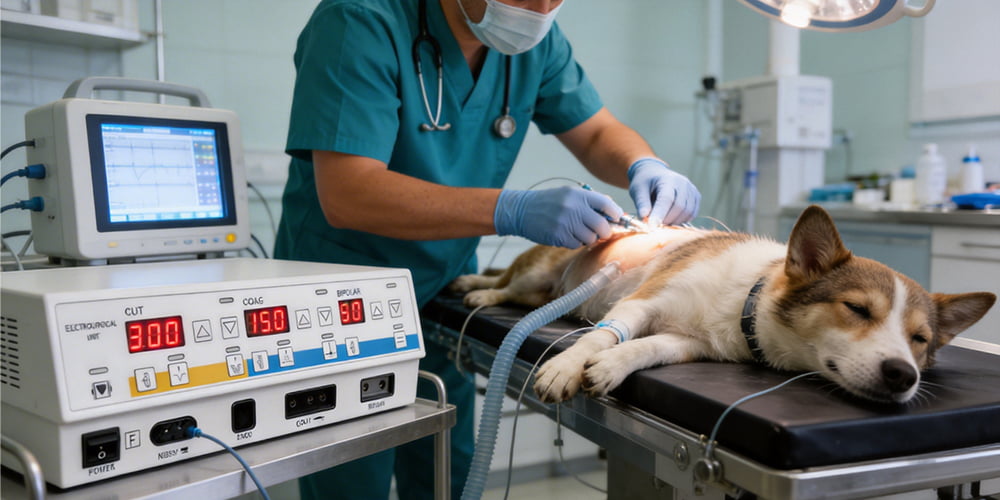
Modern veterinary medicine continues to evolve with advanced medical technologies that improve surgical precision and patient safety. Among these technologies, the veterinary electrosurgical unit has become an essential tool in many animal hospitals and veterinary clinics.
Electrosurgery allows veterinarians to perform surgical procedures with greater control, reduced bleeding, and improved efficiency compared to traditional surgical techniques. As a result, veterinary electrosurgical units are increasingly used in soft tissue surgery, tumor removal, dental procedures, and many other operations.
In this article, we will explore how electrosurgical units work, their benefits in veterinary surgery, and why they have become indispensable equipment for modern veterinary clinics.
What Is a Veterinary Electrosurgical Unit
A veterinary electrosurgical unit is a medical device that uses high-frequency electrical currents to cut tissue or coagulate blood vessels during surgical procedures. This technology allows veterinarians to perform precise surgical actions while minimizing blood loss.
Unlike traditional surgical instruments such as scalpels or scissors, electrosurgical devices deliver controlled electrical energy through specialized electrodes. The energy generates heat within tissue, enabling surgeons to cut or coagulate simultaneously.
Typical components of a veterinary electrosurgical system include:
- High-frequency generator
- Surgical handpiece or electrode
- Patient return electrode
- Footswitch control
- Adjustable power settings
These devices allow veterinarians to switch between cutting and coagulation modes depending on the surgical requirement.
How Electrosurgery Works in Veterinary Procedures
Electrosurgery works by delivering high-frequency electrical currents through tissue. When the current passes through the tissue, it generates heat that causes cellular water to vaporize. This process enables surgeons to cut tissue precisely while sealing small blood vessels.
There are two primary electrosurgical techniques used in veterinary medicine:
- Monopolar Electrosurgery – Electrical current flows from the active electrode through the patient’s body to a return electrode.
- Bipolar Electrosurgery – Electrical current flows between two tips of a bipolar forceps, allowing greater precision.
Both methods help veterinarians perform surgical procedures more efficiently while minimizing tissue damage.
Key Benefits of Electrosurgical Units in Veterinary Surgery
Reduced Bleeding During Surgery
One of the biggest advantages of using a veterinary electrosurgical unit is its ability to control bleeding. The coagulation function seals blood vessels quickly, which improves surgical visibility and reduces complications.
- Clearer surgical field
- Improved surgical visibility
- Reduced surgical complications
Improved Surgical Precision
Electrosurgical devices allow veterinarians to perform highly precise incisions. Controlled electrical energy helps surgeons cut tissue cleanly while minimizing trauma to surrounding tissue.
This precision leads to:
- More accurate surgical procedures
- Less tissue damage
- Better clinical outcomes
Faster Surgical Procedures
Because electrosurgical units can cut and coagulate simultaneously, surgeries can be completed more quickly compared to traditional methods.
- Shorter surgery time
- Reduced anesthesia exposure
- Improved operating efficiency
Better Recovery for Animals
Minimally invasive techniques supported by electrosurgery can help animals recover faster after procedures.
- Reduced tissue trauma
- Lower risk of infection
- Faster healing time
Common Applications in Veterinary Clinics
Veterinary electrosurgical units are widely used in modern veterinary hospitals and animal clinics.
Common applications include:
- Soft tissue surgery
- Tumor removal procedures
- Spay and neuter surgeries
- Veterinary dental procedures
- Small animal surgeries for dogs and cats
These procedures benefit from improved surgical precision and effective bleeding control.
Electrosurgical Units vs Traditional Surgical Tools
Traditional surgical instruments such as scalpels rely on mechanical cutting, while electrosurgical devices combine cutting with coagulation.
- Better bleeding control
- Higher surgical precision
- Faster surgical procedures
- Reduced tissue trauma
Because of these advantages, electrosurgical technology is increasingly becoming standard equipment in veterinary surgery rooms.
How to Choose the Right Veterinary Electrosurgical Unit
When selecting a veterinary electrosurgery system for your clinic, several important factors should be considered.
- Power output for different surgical procedures
- Support for monopolar and bipolar modes
- Reliable safety protection systems
- User-friendly interface and operation
Choosing a high-quality system can significantly improve surgical efficiency and safety in veterinary practices.
Essential Equipment for Modern Veterinary Surgery
In addition to electrosurgical units, several other types of equipment are important for modern veterinary surgical environments.
- Veterinary anesthesia machines
- Veterinary patient monitors
- Veterinary infusion pumps
- Veterinary ICU cages
Together, these technologies create a safer and more efficient surgical workflow for veterinary professionals.
Conclusion
Veterinary electrosurgical units have transformed modern veterinary surgery by improving precision, reducing bleeding, and increasing overall surgical efficiency.
By integrating advanced electrosurgical equipment into their operating rooms, veterinary clinics can achieve better surgical outcomes and provide higher standards of animal care.
If you are looking for professional veterinary surgical equipment for your clinic, feel free to contact our team or explore our range of veterinary medical equipment designed for modern animal hospitals.
Frequently Asked Questions
What is a veterinary electrosurgical unit used for?
A veterinary electrosurgical unit is used to cut tissue and control bleeding during animal surgery using high-frequency electrical energy. It helps veterinarians perform procedures with greater precision and efficiency.
Is electrosurgery safe for animals?
Yes, electrosurgery is widely used in veterinary medicine and is considered safe when performed by trained professionals. It reduces bleeding and allows more precise surgical procedures.
What surgeries use veterinary electrosurgical units?
Veterinary electrosurgical units are commonly used for soft tissue surgery, tumor removal, spay and neuter procedures, and some dental surgeries.
What is the difference between monopolar and bipolar electrosurgery?
Monopolar electrosurgery passes electrical current through the patient to a return electrode, while bipolar electrosurgery passes current between two electrodes, providing higher precision.
How do I choose the right veterinary electrosurgical unit?
When selecting a veterinary electrosurgical unit, consider power output, safety features, available surgical modes, and ease of operation for veterinary staff.