
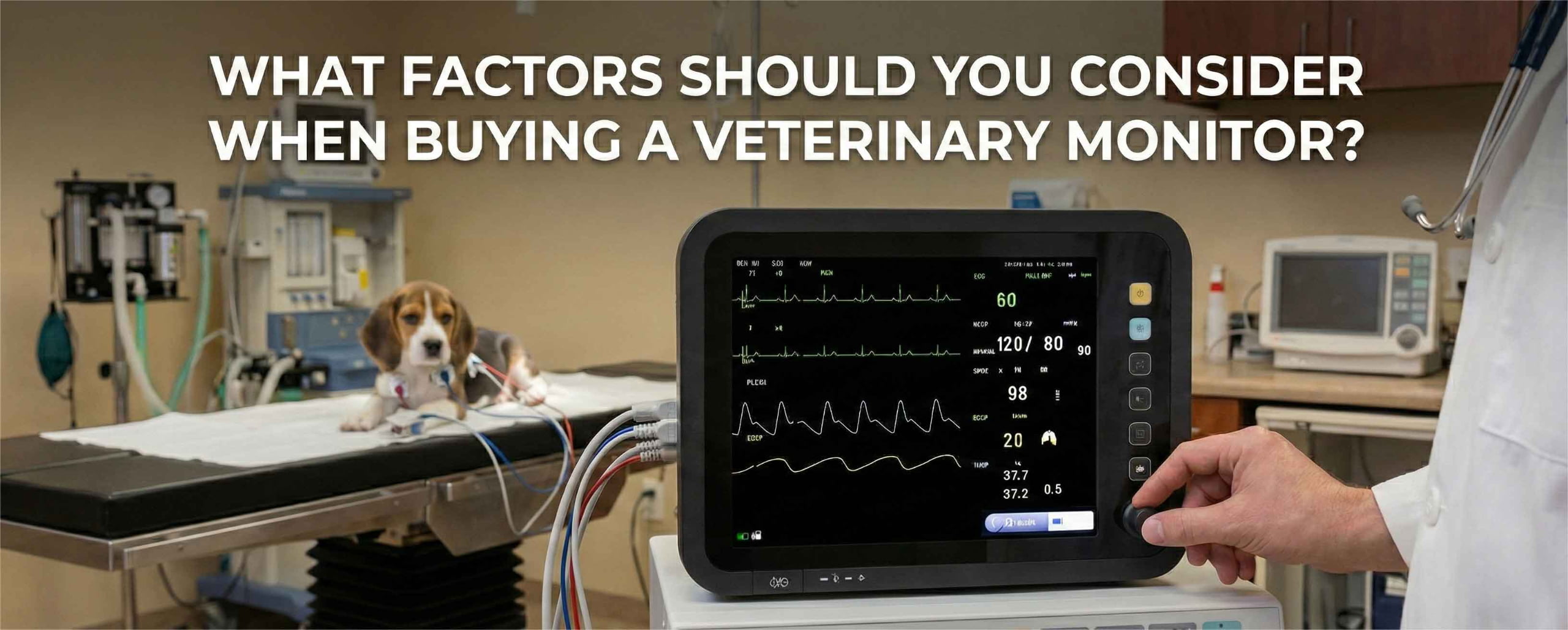
 You worry about equipment failing during a critical surgery. It is a nightmare for every vet. You need a reliable solution now.
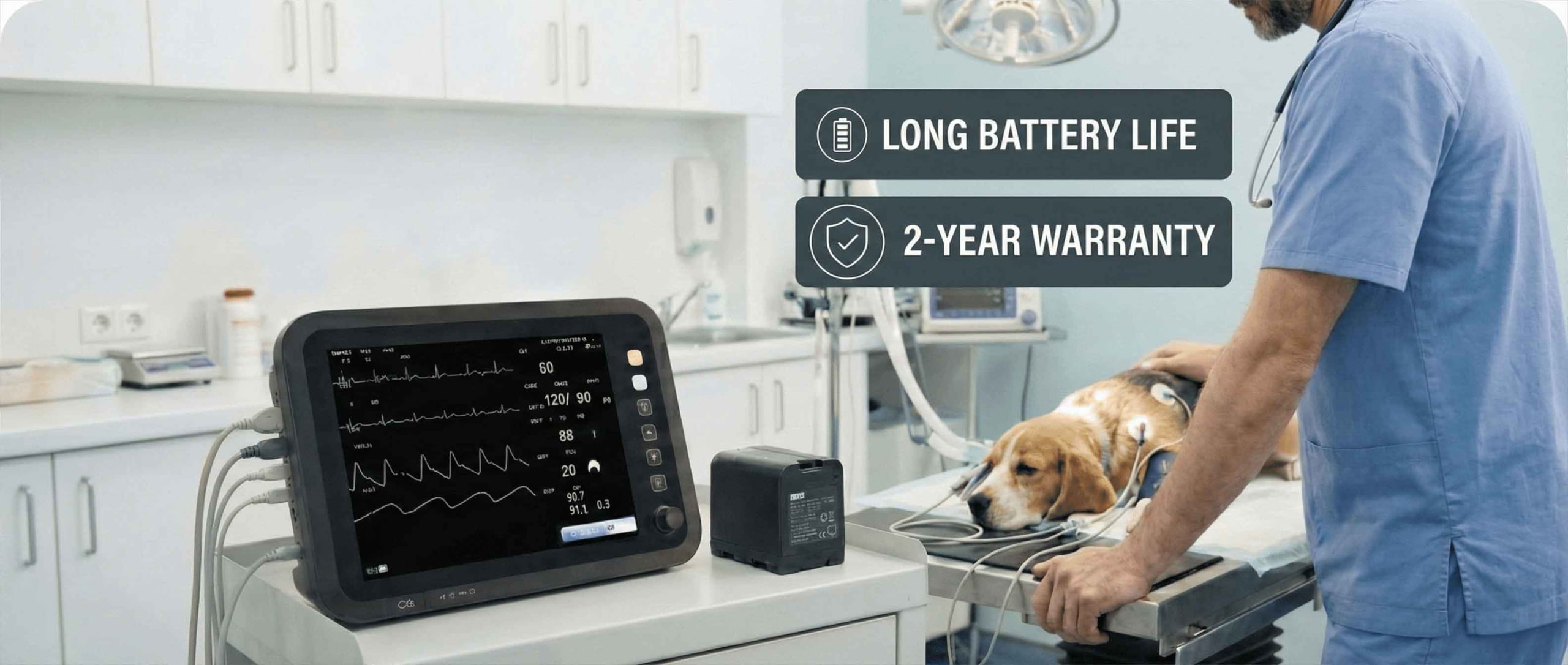
When buying a veterinary monitor, prioritize stable performance to avoid mid-surgery failures and look for long battery life for flexibility. Look for manufacturers offering extended warranties, like two years, and options for extra battery capacity to ensure uninterrupted animal care.
I have seen many professionals struggle with these choices. Let us look at the details together.
How to choose the right portable veterinary monitor for my clinic?
Buying the wrong device wastes money and risks animal lives. You want the best fit for your specific clinic needs.
To choose the right monitor, assess your clinic's primary caseload and power needs. Avoid devices with a history of instability. Look for features like specific battery capacity (e.g., 2600mAh) and extended warranties to guarantee long-term reliability and cost-effectiveness.
I recently connected with some dealers and veterinary partners. They complained to me about two main problems with other brands they had worked with. First, the quality is poor. Many of you run general clinics. You do many surgeries. It is terrible when a machine breaks down in the middle of an operation. It puts the animal in danger. Second, the battery dies too fast. This limits where you can work.
At Olivevet, we solve these problems. We test our machines strictly. We know reliable equipment is the most important thing for you. Because we trust our quality, we offer a better warranty.
Warranty Comparison
| Feature | Standard Industry Offer | Our Olivevet Offer |
|---|---|---|
| Main Unit Warranty | 1 Year | 2 Years |
| Accessories Warranty | 6 Months / 1 Year | 1 Year |
We also focus on power. Our VET-VM12H model has a 2600mAh lithium battery. The VET-VM12A has a 2000mAh lithium battery. These allow standby times of 3 to 5 hours. For continuous work, they last about 2 hours. I know some surgeries take longer. So, we offer an option to add an extra battery. This makes the machine work for about 4 hours. You do not have to worry about the screen going black.
What vital signs do veterinary monitors usually track?
Missing a heartbeat or a drop in oxygen can be fatal. You must know exactly what is happening inside the patient.
Standard veterinary monitors track essential signs including ECG (heart rate), SpO2 (oxygen saturation), NIBP (blood pressure), respiration rate, and temperature. Advanced models may also include Capnography (EtCO2) and invasive blood pressure for critical surgeries.
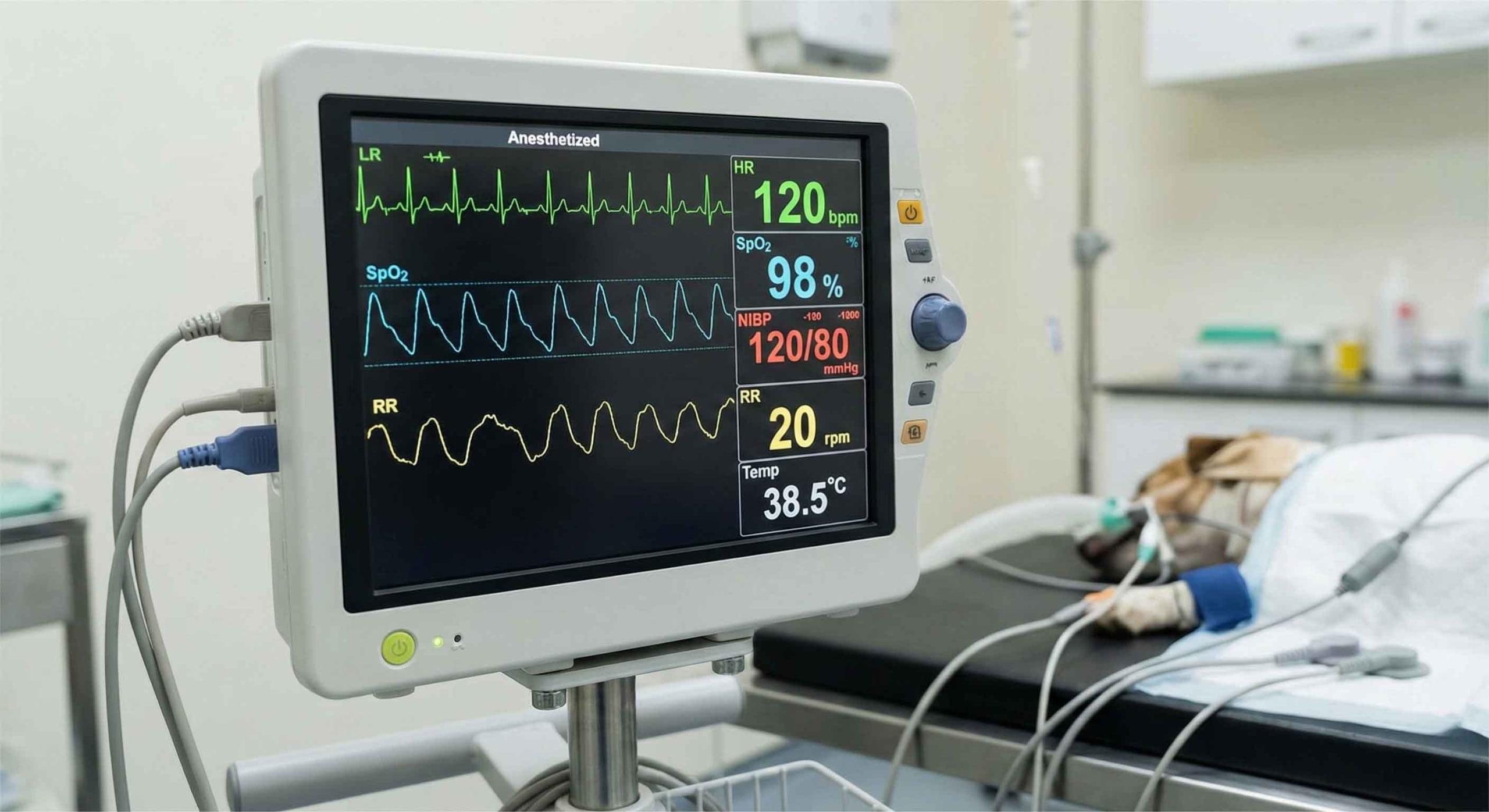
When you look at a monitor, you see many numbers. Each one tells a story about the animal's health. I want to break down what we usually track and why it matters for your daily work.
Core Parameters
- ECG (Electrocardiogram): This shows the electrical activity of the heart. It helps you see arrhythmias.
- SpO2 (Oxygen Saturation): This is very important during anesthesia. It tells you if the animal is getting enough oxygen.
- NIBP (Non-Invasive Blood Pressure): This tracks blood flow. Low pressure can mean the animal is in shock.
- Respiration Rate: This counts breaths per minute.
- Temperature: Anesthesia makes animals cold. You must watch this to keep them warm.
I have seen cheap portable veterinary monitors give wrong numbers. This is dangerous. Our sensors are sensitive and accurate. We use high-quality components to ensure the data is real. When you see a number on our VET-VM12 series, you can trust it. We build our devices to give you the full picture. This helps you make the right decisions quickly.
Which types of pets are best suited for veterinary monitors?
Small pets are fragile, and large animals are complex. You need to know if one device can handle them all safely.
Veterinary monitors are suitable for a wide range of animals, from small cats and dogs to larger exotic pets. The key is having adjustable software algorithms and appropriate cuff sizes to measure vital signs accurately across different species.
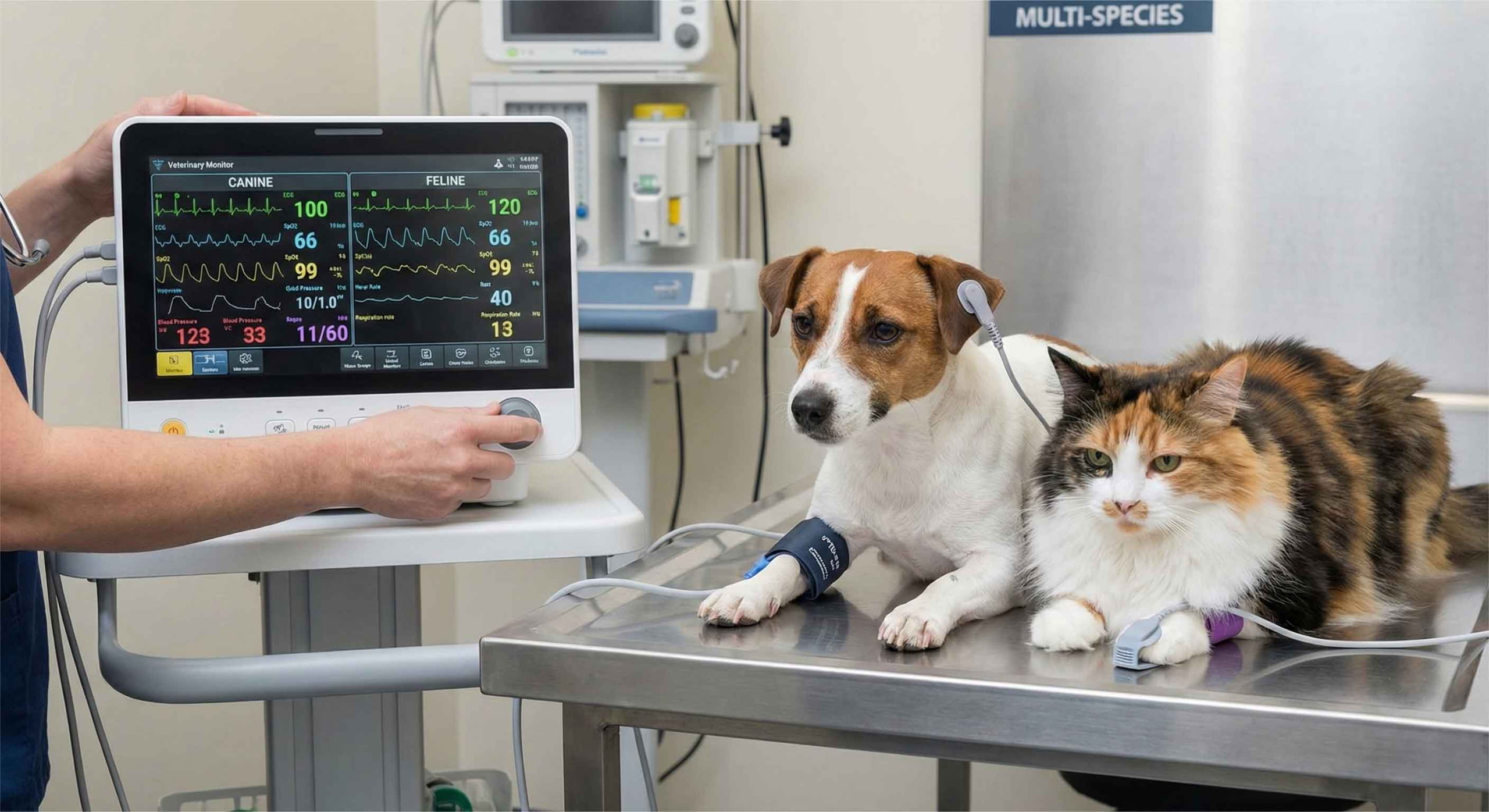
I know that most of my clients run general clinics. You do not just see one type of animal. In the morning, you might treat a large Golden Retriever. In the afternoon, you might treat a small kitten. A good monitor must handle both.
The challenge is the signal. A large dog has a strong heart signal. A small cat has a very weak signal. If the monitor is not good, it will not pick up the cat's heartbeat. It might show a flat line when the cat is actually fine. This causes unnecessary panic.
Why Versatility Matters
- Algorithm Adaptation: Our monitors use software that adjusts to the animal size. You can select the patient type. The machine then changes how it looks for signals.
- Accessory Range: We provide different sizes of cuffs and sensors. You cannot use a large cuff on a small leg. It gives wrong blood pressure readings.
We design our products for this variety. Whether it is an old dog with a slow heart or a nervous cat with a fast heart, the device adapts. This makes your investment safer. You buy one machine, and it serves all your patients.
Can veterinary monitors be used outside the operating room?
Emergencies happen anywhere, not just on the table. You need equipment that moves with you to save lives instantly.
Yes, monitors can be used outside the operating room if they are portable and have strong battery life. They are essential for recovery rooms, ICU monitoring, and mobile clinics where stable power sources might not be available.
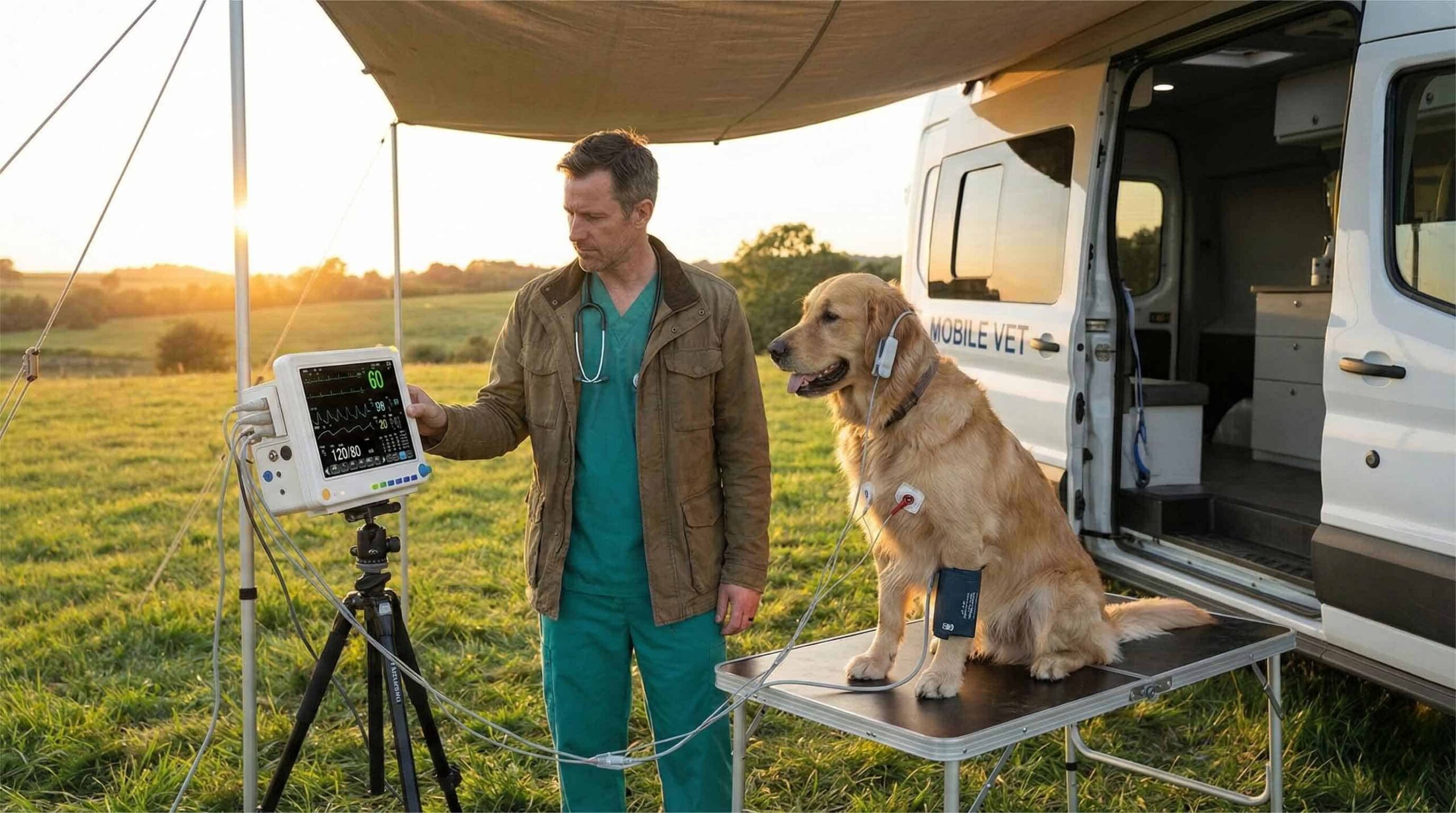
Many people think monitors only stay in the surgery room. This is not true anymore. I see more vets working in different places. You might have a mobile clinic van. You might need to move a sick animal to a recovery cage.
In these places, you often do not have a power outlet. This brings us back to the battery issue. If a battery only lasts 30 minutes, it is useless here.
Common Scenarios for Battery Use
- Mobile Clinics: You drive to the pet owner. You need to do a quick check in the van.
- Post-Surgery Transport: You move the dog from surgery to the kennel. You must monitor them during the move.
- Power Outages: Sometimes the power goes out. You need the machine to keep running.
This is why we offer the extra battery option. As I mentioned, our VET-VM12H and VET-VM12A have good internal batteries. They last about 2 hours working hard. But with the extra battery, you get 4 hours. This gives you freedom. You can take the monitor to the animal. You do not have to bring the animal to the monitor. It reduces stress for everyone.
Conclusion
Choose a portable veterinary monitor with reliable quality and a long 2-year warranty. Ensure it has a strong battery, like our 2600mAh option, to handle any situation in your clinic.