
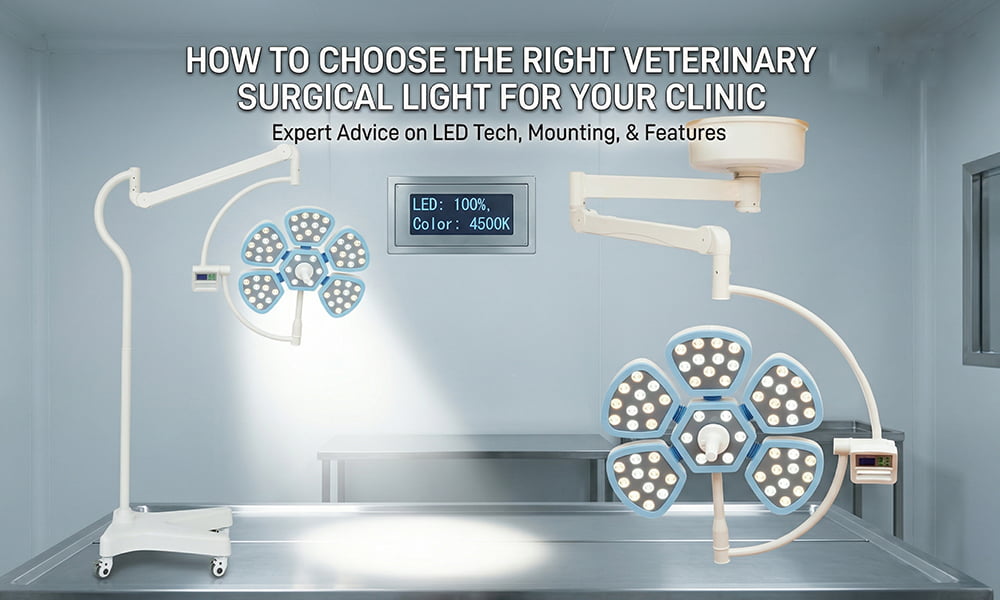
In veterinary surgery, precision is critical—and lighting plays a key role in achieving it. A high-quality veterinary surgical light ensures clear visibility, reduces eye strain, and improves overall surgical outcomes.
However, many clinics struggle with poor illumination, excessive heat, or inconsistent lighting. Choosing the right solution is not just a technical decision, but an investment in your clinic’s efficiency and long-term performance.
In this guide, we will walk you through the key factors to consider when selecting the best surgical light for your veterinary practice.
What Is a Veterinary Surgical Light?
A veterinary surgical light is a specialized medical lighting system designed to provide bright, focused, and shadow-free illumination during procedures.
- High-intensity lighting for clear visibility
- Shadowless performance to avoid obstruction
- Accurate color rendering for better diagnosis
- Flexible positioning for different procedures
These features are essential for improving surgical accuracy and reducing risks.
Key Factors to Consider When Choosing a Veterinary Surgical Light
1. Light Intensity (Lux Level)
Brightness is measured in lux and directly impacts visibility during surgery.
- Too low: poor visibility and higher risk
- Too high: eye fatigue and discomfort
A surgical light with adjustable brightness is ideal for different procedures.
2. Shadowless Performance
Shadows caused by hands or instruments can affect precision. Modern lights use multi-source LED technology to ensure uniform, shadow-free illumination.
3. Color Temperature and CRI
Accurate color rendering is essential for identifying tissue differences.
- High CRI improves color accuracy
- Balanced color temperature enhances visual comfort
4. Heat Management
Traditional lights generate heat, which can cause discomfort. LED lights offer low heat output, making them safer for long procedures.
5. Adjustability and Flexibility
A good surgical light should allow easy positioning and adjustment:
- Flexible arm movement
- Adjustable light field size
- Smooth positioning controls
6. Durability and Lifespan
LED surgical lights typically provide:
- 50,000+ hours lifespan
- Low maintenance
- Consistent performance
LED vs Halogen Surgical Lights
Choosing between LED and halogen is a key decision:
- LED: High brightness, low heat, long lifespan
- Halogen: Lower cost but higher heat and maintenance
Conclusion: LED surgical lights are the preferred choice for modern veterinary clinics.
Types of Veterinary Surgical Lights
- Ceiling-mounted: Ideal for operating rooms
- Wall-mounted: Space-saving option
- Mobile lights: Flexible and easy to move
Choosing Based on Your Clinic Needs
- Small clinics: Mobile and cost-effective lights
- Medium clinics: Adjustable LED systems
- Large hospitals: High-end ceiling-mounted solutions
There is no one-size-fits-all solution, so choose based on your workflow and budget.
Budget and Cost Considerations
While upfront cost matters, long-term value is more important.
- LED lights reduce maintenance costs
- Higher efficiency lowers operating expenses
Investing in quality equipment leads to better long-term ROI.
How to Choose a Reliable Supplier
Working with a trusted supplier ensures product quality and support.
- Check if they are a manufacturer
- Verify certifications (CE, ISO)
- Look for OEM/ODM capabilities
- Evaluate after-sales service
You can explore a professional solution here:
Veterinary Surgical Light Petal-Shaped
Common Mistakes to Avoid
- Choosing based on price alone
- Ignoring heat and comfort
- Overlooking adjustability
- Not checking warranty
Conclusion
A high-quality veterinary surgical light improves precision, efficiency, and safety in your clinic.
By evaluating key factors such as brightness, shadow control, and supplier reliability, you can make a smart investment that enhances both performance and long-term value.
Explore more veterinary equipment solutions on our
Veterinary Blog.
FAQ
What is the ideal lux level for veterinary surgery?
Most procedures require adjustable lighting between 40,000 and 100,000 lux.
Are LED surgical lights better than halogen?
Yes, LED lights offer better efficiency, lower heat, and longer lifespan.
How long do veterinary surgical lights last?
LED lights can last over 50,000 hours.
Can mobile surgical lights be used in small clinics?
Yes, they are ideal due to flexibility and affordability.